


 0
0 
Before we come to ODMCS tests, it is better to first do a recap on the requirements of ODMCS. ODMCS (Oil discharge monitoring control system), sometimes also called ODME (Oil discharge monitoring equipment) is an equipment required under Marpol Annex 1 and is required to monitor discharge of oily mixture from cargo tanks of oil tankers.
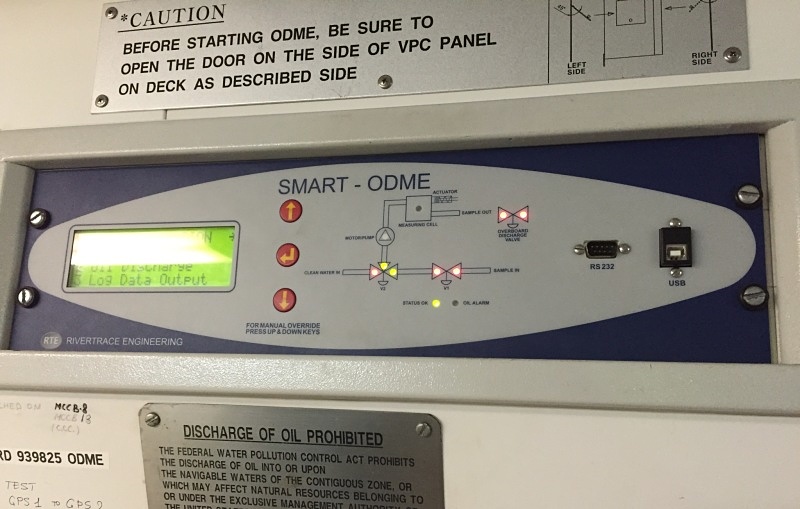
The Marpol requires following for discharging oily Mixture
- The tanker should not be in special area
- The tanker should be Enroute
- The tanker must be more than 50 Nautical miles from the nearest land
- The instantaneous rate of discharge should not exceed 30 litres per Nautical mile
- The total quantity of oil discharged should not exceed 1/30000 of the total quantity of cargo of which the residues formed a part.
- The tanker must have an approved ODMCS and it should be operational
ODMCS is installed to ensure compliance with the requirements no 4 and 5 and so the testing of ODMCS should be based upon to find if
- The ODMCS would actually stop if “instantaneous rate of discharge” exceeds 30 litres per nautical mile.
- The ODMCS should stop when total oil discharged has reached the allowed limits as per point 5 above.
It is general practice among many seafarers to test the ODMCS for only IRD, but as I have pointed out, the regulation require the ODMCS to stop when total oil discharged limit exceeds and thus this is an equally important test too.
Test for Instantaneous rate of Discharge
The formula for IRD is
IRD (in litres/Nautical mile)= Oil content(ppm) x Flow rate (m3/hr) / Speed (Knots) x 1000
Join now to access this article and much more.
Admin has placed this article behind a paywall, making it accessible only with a paid membership, which offers numerous perks:
- Contribute to creating a platform for reading and writing without ads.
- Enjoy all content here, including exclusive articles for members.
- Gain access to all exclusive articles for members.
About Capt Rajeev Jassal


Capt. Rajeev Jassal has sailed for over 24 years mainly on crude oil, product and chemical tankers. He holds MBA in shipping & Logistics degree from London. He has done extensive research on quantitatively measuring Safety culture onboard and safety climate ashore which he believes is the most important element for safer shipping.



Comments (0)