


 132
132 
I still remember the condition that was put by our first chief officer for us to enter wheelhouse and keep a watch with him. The condition was that we should know each rule of the road word by word. 18 years later, while writing this post I realize how appropriate his condition was.
When it comes to navigation and watch keeping, to be crystal clear about COLREGS is undoubtably the priority. It takes several watches to be kept under the guidance of an officer to be clear about these rules.
Problem is that we have nowadays moved from having a trainer to self training. Officers on board a ship are overloaded with their own work and so do not have time to train their juniors. In these cases, junior officers have to work on self training.
In this post we will discuss in detail 8 rules every watch keeper must know. But before we move to the rules, we must know the sections in which COLREGS are divided. This is important because not all the rules are applicable in all the situations. For example rules under Part B, Section II are only applicable when you can visually see the other vessel. So we should know which rule is applicable under which condition.
Sections and parts of Colreg
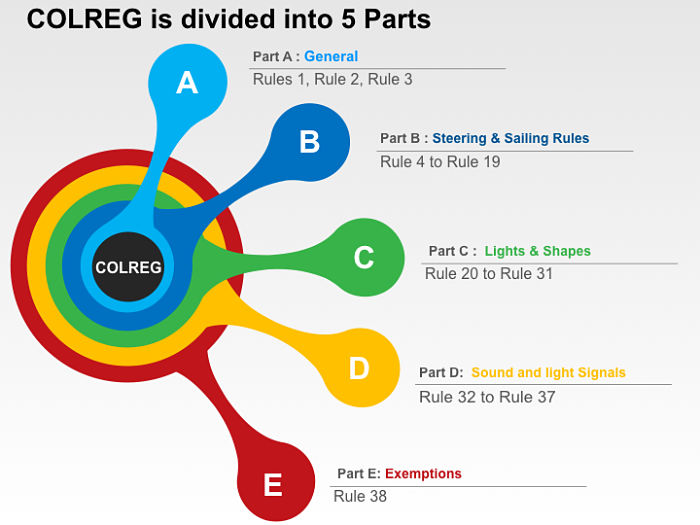
Rules of the road are divided into Five parts. These are
- Part A: General
- Part B: Steering and sailing rules
- Part C: Light and shapes
- Part D: Light and sound signals
- Part E: Exceptions
Recently in January 2016, there is another part (Part F) that has been added in the COLREG. This part deal with the verification of compliance which is not directly related to the seafarers.
Join now to access this article and much more.
Admin has placed this article behind a paywall, making it accessible only with a paid membership, which offers numerous perks:
- Contribute to creating a platform for reading and writing without ads.
- Enjoy all content here, including exclusive articles for members.
- Gain access to all exclusive articles for members.

About Capt Rajeev Jassal


Capt. Rajeev Jassal has sailed for over 24 years mainly on crude oil, product and chemical tankers. He holds MBA in shipping & Logistics degree from London. He has done extensive research on quantitatively measuring Safety culture onboard and safety climate ashore which he believes is the most important element for safer shipping.



Comments (132)