
Simplifying SCOPIC clause and salvage convention

Salvage mean “rescue a wrecked or disabled ship or its cargo from loss at sea”. The party rescuing is called “Salvor” and the wrecked or disabled ship is called “Property being salvaged”. Simply put, as per salvage convention Salvor does a work to salvage the property and he gets a reward / Compensation for his efforts to save the property.
The introduction and historical developments in salvage convention apart from listing the duties of various parties, has been based upon the question of when and how much monetary benefits the salvor should get for his efforts.
History has seen three major developments in the salvage law
- Brussel Convention
- Salvage convention in 1989 and
- SCOPIC Clause in the LOF.
The Brussels convention was the first official convention to talk about salvage at sea and was based upon the “NO CURE, NO PAY” principle. The major problem with the Brussels convention was that salvors would not touch a high risk property as because of being high risk, their chances of getting monetary benefits as well as to recover their expenses were minimal.
In the late 80s, with few of the infamous oil pollution incidents, it became a necessity to encourage salvor to take up the high risk salvage contract where potential oil pollution and marine environment was involved and for this reason a special compensation under article 14 was introduced in salvage convention which was also the main distinguishing thing from Brussel’s convention.
As per Article 14 “if the salvor by his salvage operations has prevented or minimised damage to the environment, salvor is entitled for a special compensation equivalent to his expenses which can be increased up to 30% to 100% of the expenses under certain circumstances. These expenses were to be born by ship owners and this was the first time when P&I clubs were also involved in salvage operation as they had to pay these expenses on owners behalf.”
Both Salvor and the ship owners had few concerns with Article 14. Shipowners and P&I clubs were concerned that Salvor could unnecessarily prolong the salvage operation to claim more expenses under special compensation. Also the the Hull underwriters might delay the decision to declare the vessel as “Total Constructive loss” as they would have nothing to loose by delaying their decision.
Salvor’s concerns mainly were to the applicability of article 14 as this was only applicable in coastal and inland waters and it only applied if there was a threat to the environment which they had to prove.
That is when SCOPIC clause came into play.
There were number of discussions to solve the limitations of article 14 and various solutions were discussed including a revision of existing salvage convention but it was finally decided to incorporate SCOPIC clause in the Lloyds open form (LOF) with no changes in the salvage convention. LOF is the contract form between the salvor and owner of the ship.
SCOPIC clause once invoked substitutes article 14. SCOPIC clause solved two concerns for salvors. One, SCOPIC once invoked was applicable in all geographical locations and was not limited to coastal and inland sea. Also SCOPIC was applicable even if there was no threat to the environment and second, SCOPIC clause required security of USD 2 millions which made the salvor sure of the payments.
The developments in salvage conventions has been to encourage Salvors to perform even the high risk salvage operation and at same time to ensure that Salvors do not take advantage of their rights as per Salvage conventions and introducing SCOPIC clause in LOF was one such step.
As per para 2 of SCOPIC clause “The Contractor shall have the option to invoke by written notice to the owners of the vessel the SCOPIC clause set out hereafter at any time of his choosing regardless of the circumstances and, in particular, regardless of whether or not there is a “threat of damage to the environment”.
So It is upto Salvor if he wants to invoke SCOPIC or not and he can invoke it at any time. The question is what will make Salvor decide if he should invoke SCOPIC or not ?
With SCOPIC clause the Salvor is absolutely certain of at least recovering his expenses. If at any time the salvor feels that he might not be able to save the property, he would want to invoke SCOPIC clause as if he doesn’t , he will not get any compensation on the principal of “NO CURE NO PAY”. He would get to recover his expenses under article 14 only if there is threat to environment, which again he has to prove. But then the question is what is stopping him to invoke SCOPIC at the start of the contract ? and the answer lies in the para 7 of the SCOPIC clause which states
“If the SCOPIC clause is invoked under sub-clause 2 hereof and the Article 13 Award or settlement under the Main Agreement is greater than the assessed SCOPIC remuneration then, notwithstanding the actual date on which the SCOPIC remuneration provisions were invoked, the said Article 13 Award or settlement shall be discounted by 25% of the difference between the said Article 13 Award or settlement and the amount of SCOPIC remuneration that would have been assessed had the SCOPIC remuneration provisions been invoked on the first day of the services”.
Which mean that if SCOPIC clause is invoked and the salvor was able to save property and hence was eligible for award as per article 13, his reward would be reduced by 25%. So if the salvor is very much certain for success of salvage, he would not invoke SCOPIC clause.
I would come back with a blog on what Masters and ship staff are supposed to know and do in salvage operations.
Wishing you all fair winds and following seas…
Different types of bill of ladings

There are different criteria on which bill of ladings can be defined and differentiated.
Few of these criteria being the “place from where carriers takes the responsibility of the cargo” (Port to port, Multimodal and through bill of ladings) or if the owner of the cargo can sell the cargo before it reaches by transferring the title of the bill of lading (Negotiable and non-negotiable bill of lading)
Different types of bill of ladings based upon Negotiable and non Negotiable documents
The main difference between the two types is the title (ownership) of the bill of lading.
While one can be transferred to another party, the other is consigned to a named party and hence he/she has to be the final recipient of the cargo as the title of this type of bill of ladings cannot be transferred.
Readers should not confuse the negotiable and non-negotiable types of bill of ladings with the “negotiable” and “non-negotiable” copies of the signed bill of ladings.
1. Straight bill of lading:
The straight bill of lading is specified to the particular party and the specified party cannot re-assign it to anyone else. The party only has to take the delivery of the cargo and the cargo cannot be sold by transferring the bill of lading to another party’s name.
Q: Can you think of an example when the straight bill of lading can be and will be used?
2. Order bill of lading
This is the bill of lading that one would mostly come across onboard. The bill of lading is to the consignee or to his order. That is the named consignee will be the owner of the cargo or he can order the shipment to be delivered to another party by endorsing the bill of lading to that party.
As the title (ownership) of the bill of lading can be transferred, the Order bill of lading is the negotiable document.
3. Bearer bill of lading
The bearer bill of lading is the one in which the bearer of the bill of lading is the owner of the cargo and there is no consignee named in the bill of lading.
This kind of bill of lading is very seldom found as there are huge risks involved in the misuse of this kind of bill of ladings.
Again as the title (ownership) of the bill of lading can be transferred, the Order bill of lading is a negotiable document.
4. Switch bill of lading
This can said to be the duplicate bill of lading for a cargo of which the bill of lading was already issued.
Switch bill of lading is generally requested by the consignee from the owner of the vessel when the consignee does not wish to reveal to the new buyer the identity of the shipper of the cargo.
Types of Bill of ladings based upon carriers responsibility
1. Port to port bill of lading (also called Ocean bill of lading)
In this kind of bill of ladings, Carrier’s responsibility starts at the port of loading and ends at the port of discharge
2. Multimodal or Combined bill of lading
This kind of bill of lading covers more than one mode of transfers (for example, Ocean and rail or Ocean and road) and covers all the modes of transfers.
Carrier has the responsibility from a place of receipt to place of delivery of the cargo.
Carrier can hire/subcontract to carry the cargo in one or more modes of transfers.
3. Through bill of ladings
The main difference between multimodal and through bill of lading is that in through bill of lading there is only one mode of cargo movement but has different legs, like sea and inland waterways.
Whereas in the multimodal bill of lading there have to be at least two modes of cargo movement (like sea and land).
With respect to carrier’s responsibility, in through bill of lading, the carrier is responsible only for their leg of sea transport.
Many believe there is no difference between the Multimodal and through bill of ladings which is not correct.
* If you think there is another important bill of lading that has been missed out here, please share in the comment section and I would be happy to include that in this blog.
How confident are you about your ODMCS ?
Before we come to ODMCS tests, it is better to first do a recap on the requirements of ODMCS. ODMCS (Oil discharge monitoring control system), sometimes also called ODME (Oil discharge monitoring equipment) is an equipment required under Marpol Annex 1 and is required to monitor discharge of oily mixture from cargo tanks of oil tankers.
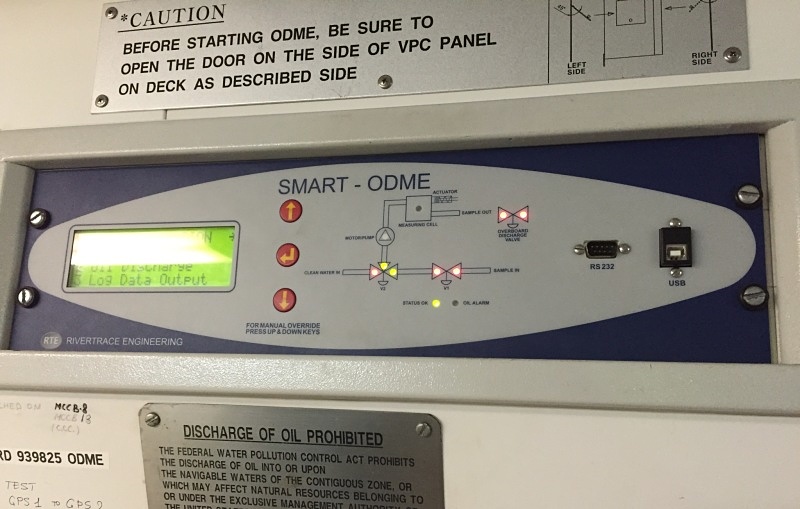
The Marpol requires following for discharging oily Mixture
- The tanker should not be in special area
- The tanker should be Enroute
- The tanker must be more than 50 Nautical miles from the nearest land
- The instantaneous rate of discharge should not exceed 30 litres per Nautical mile
- The total quantity of oil discharged should not exceed 1/30000 of the total quantity of cargo of which the residues formed a part.
- The tanker must have an approved ODMCS and it should be operational
ODMCS is installed to ensure compliance with the requirements no 4 and 5 and so the testing of ODMCS should be based upon to find if
- The ODMCS would actually stop if “instantaneous rate of discharge” exceeds 30 litres per nautical mile.
- The ODMCS should stop when total oil discharged has reached the allowed limits as per point 5 above.
It is general practice among many seafarers to test the ODMCS for only IRD, but as I have pointed out, the regulation require the ODMCS to stop when total oil discharged limit exceeds and thus this is an equally important test too.
Test for Instantaneous rate of Discharge
The formula for IRD is
IRD (in litres/Nautical mile)= Oil content(ppm) x Flow rate (m3/hr) / Speed (Knots) x 1000
For ODMCS discharge valve to open, the IRD should be less than 30 L/NM and we just play with oil content, flow rate and speed (enter these values manually) to get the IRD to say 29.8 L/NM and discharge valve should open. We then increase the oil content a bit to make the IRD 30.1 L/NM to see if the discharge valve closes. Pretty simple. However this is just the simulation test which just tells us that the computing unit of ODMCS is working alright.
It does not tell us if in actual operation the oil content meter and flow meter will give correct reading of oil content and sample flow respectively. For this reason, the oil majors require the annual calibration of oil content meter and flow meter by an external competent company. Master and ship staff should ensure that such annual test has been carried out and certificate is available onboard.
It is also important in actual operation of ODMCS that sample is drawn from the discharge line and fed to oil content meter so that it can measure the oil content in the oily water. This sample is drawn and circulated through oil content meter by Sample pump. This makes the sample pump extremely important for the functioning of ODMCS and hence sample pump should be checked monthly for its free movement by rotating with hand
Test for Total quantity Discharged
First of all let us understand the rationale behind this requirement. The first requirement was that while the ship is moving, you can discharge 30 litres of oil contained in the oily water provided this 30 litre is spread over one nautical mile. If the second requirement is not there, one could keep on diluting the oily mixture to make sure IRD is always less than 30 L/NM and pump out entire tank content. This requirement limits the total oil that a ship can discharge irrespective of complying with the first requirement.
So if the vessel was carrying 45000 m3 of oil cargo and oily mixture are formed from washing or ballasting these tanks, the total oil that can be discharge through ODMCS is 45000/30000 which is 1.5 m3 or 1500 Ltrs. This figure need to be entered in the ODMCS before actual run of ODMCS.
Now how to test if after achieving this limit the ODMCS will shut the discharge valve and open re-circulation valve. Test is again pretty simple, set a lower value and run the ODMCS in simulation mode with IRD say around 29 L/NM. You would see the Total oil discharged reading go up. When you reach the set value of total oil discharged, the ODMCS should shut the discharge valve.
Even though there may be some other small tests like power failure test etc. Checking and testing the ODMCS and associated components as mentioned above would most likely ensure that your ODMCS would be ready when you require it.
Ensuring compliance with ENOA/D for vessel trading in US waters
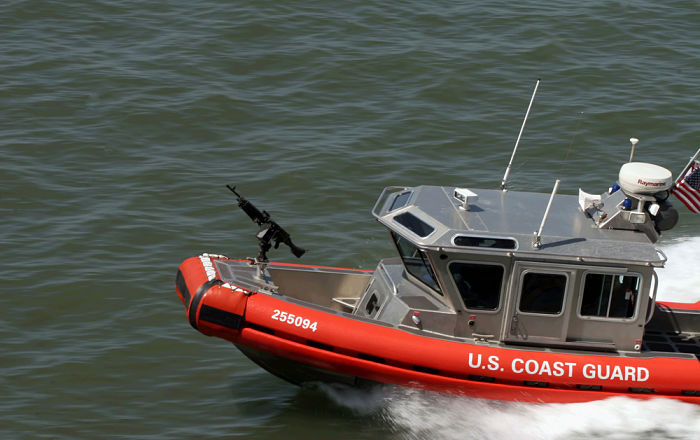
ENOA/D stands for “electronic Notice of arrival and Departure”. Both US coast guard (USCG) and “Custom & boarder protection (CBP)” require the vessels to notify them of their arrivals and departure from the US ports. ENOA/D fulfils the Arrival and departure requirements of both USCG as well as CBP.
Who is required to submit eNOAD
As per 33 CFR 160.212(3)
Except as set out in paragraph (a)(2) of section 160.212 of 33 CFR, all vessels scheduled to arrive at any U.S. port or any port in a U.S. territory, must submit electronic Notification of Arrival/Departure (e-NOA/Ds)
What all reports are to be sent
First Arrival notice is to sent before entry into the first US port of the voyage. Subsequently Arrival notice is to be sent before each arrival to the US port. The Departure report is to be sent for last port in US. So if vessel is arriving from a foreign port to US, arrival notice is to be sent every time for each US port but the departure report is to be sent only for the last US port before finally leaving US port for a port outside US.
How these reports are to be sent
There are three ways of submitting these reports
- Through the internet, if you have internet onboard. This can be submitted by visiting https://enoad.nvmc.uscg.gov.
- Through the Microsoft infopath which is usually integrated by your onboard email provider such as amosconnect.
- Through an agent.
In case you are sending it by second option, you must ensure that you have latest version of eNOAD infopath by enquiring from IT department of your company.
Arrival Notice
Arrival notice is to be sent for each US port. Below table gives when arrival notice is required to be sent. It is always wise to send the notices well in time to allow time for last minute hiccups.
Departure Notice
Departure notice is to be sent minimum 60 minutes before departing last US port but it is always wise to send the Departure notice after berthing at last US port. If there is a crew change on the last US port , People sometimes wait for sending the departure notice until the sign on crew boards the vessel. This may not be a wise thing to do as crew might board just few minutes before the departure and then the vessel may not comply with the departure notice requirement.
There can be number of ways to handle this situation but I preferred sending the departure notice with present crew onboard and then sending the update to the departure notice, once the sign on crew boards the vessel.
Another point here is that 60 minutes time is taken from the time pilot boards your vessel and this time is communicated by the pilot and not the vessel. Pilots in USA usually arrive few minutes to few hours before their expected time, so it is very important to send the departure notice well in advance.
Update to the Arrival or Departure Notice
Update to the notice is to sent if there is any change in data sent in the initial arrival or departure notice including if the ETA (in case of arrival notice) changes to more than 6 hours. As discussed before, for Departure notice, update may need to be sent if there was a crew change after the initial Departure Notice is sent.
However if your port of arrival has changed, updating the eNOA with new port of Arrival will NOT work. Each arrival and Departure notice is for that particular port only. If the arrival port is changed, a New eNOA with updated arrival port need to be sent and previous notice need to be cancelled by calling agent or NVMC phone number.
There are Few common mistakes which ship staff could make when sending eNOA.
Errors in crew manifest in eNOAD: The important thing here is that crew names has to be as per their US Visa and not as per their passport. Other common typo errors include that in Passport numbers and date of birth. CBP can issue penalties of USD 5000 in case any such errors are spotted in the eNOAD from the vessel. Crew details should be checked multiple times before submitting the eNOA.
Confusion for Port of Arrival: Different USCG COTP interpret the “Port of Arrival” differently. Some consider it to be the designated anchorage of the port and other consider it to be the particular berth that vessel is arriving. The vessels ETA can vary drastically for both interpretation of port of arrival. Master or person responsible for sending eNOAD must clarify same in advance with the agent of the port.
Filling some information thinking you know this:
While filling up eNOA, it is always advisable to confirm Arrival port information (like City, state, Arrival port, Arrival place, Anchorage & receiving facility) and 24 Hour point of contact information from your agent, even if you think you know this.
Important point of contacts regarding eNOA
email for sending eNOAD through infopath: enoad@nvmc.uscg.gov
Website for online submission of eNOAD: https://www.nvmc.uscg.gov
General questions regarding eNOAD :
email: sans@nvmc.uscg.gov Phone: (800)-708-9823 or (304)-264-2502 Fax: (800)-547-8724 or (304)-264-2684
Shipper, consignee and Notify party, explained.

There is sometimes great confusion as to the actual identity of shipper, consignee and notify party. Here I explain these terms which are widely used in shipping specially in the bill of ladings.
Shipper: Who is this guy ??
Many believe “Shipper” is the supplier or owner of the goods being supplied. It is true but not always. The business directory defines shipper as the party responsible for the shipment. When a buyer of goods enters into a contract with seller of the goods through sale contract, apart from other things they also decide who would arrange for the transport. In the multi-modal transport, they may decide which leg of transport is under whom. Who bears what risk is also the basis of various INCOTERMS defined by the International Chamber of Commerce.
If the buyer of the goods is responsible for sea transport, he would arrange for a ship to carry the goods and enter into a “Contract of carriage” with the carrier. The buyer here would be “Shipper” under “Contract of carriage”.
Shipper is a term related to “Contract of carriage” but is also closely related to sale contract. So the Shipper bears two hats. He is shipper under “contract of carriage” but he is buyer (or seller) under sale contract.
Consignee: Consignee is the person to whom the carrier (Ship) is supposed to deliver the goods. In most cases the consignee is the Buyer of the goods but not always. Consignee could be the agent nominated by the buyer. Consignee could also be the buyer’s bank.
Another principle different between the terms “Consignee” and “buyer” is that while “Consignee” is the term used in “contract of carriage”, the term “buyer” is used in “sale contract”.
Notify Party: Notify party is the party to whom the carrier is suppose to notify regarding the arrival ETA’s of the vessel. Notify party is then responsible for arranging the arrival formalities of the vessel. By now you must have guessed it rightly that notify party could be agent , receiver of the cargo or any other person/entity who has the interest in the arrival of the cargo.
While the shipper or carrier has the responsibility to keep the notify party abreast of the arrival details of the vessel and failing to do so may lead to unpleasant situations, you may sometimes find on bill of lading a clause where shipper and carrier assume no responsibility for failure to notify. This clause is particularly common in liner shipping.
* Though very unusual, however there is no restriction on having more than one notify parties. Usually there is only one notify party, who in turn informs all other interested parties regarding the arrival notifications of the vessel and cargo.
Why crew accommodations size is reducing on ships ?
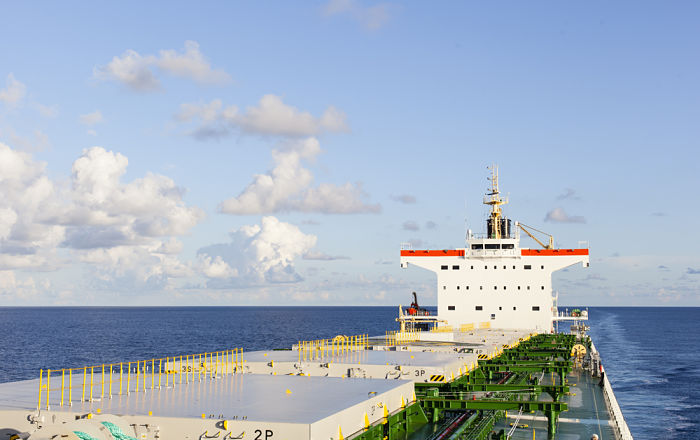
Most would agree that crew accommodation size is continuously reducing onboard new ships. Many of us have seen big crew cabins, big lounges and big gymnasiums onboard ships. However there is a trend now to have the minimum possible size of the cabins, smaller lounges and no gymnasiums onboard ships. Many suppose the reason behind this is the owner’s desire to use lesser steel and hence reduce the cost of building ship.
However this is not entirely true. By having smaller accommodations, the owners do not just save the steel cost but also the port dues that will be incurred for the life of the ship. The port dues are based on Gross tonnage of the vessel. More the gross tonnage more will be the port dues. The larger accommodations add to the gross tonnage of the ship.
Gross tonnage calculation is defined by regulation 3 of The “International Convention on Tonnage Measurement of Ships, 1969” and is based upon two variables
• V, the ship’s total volume in cubic meters (m3), and
• K, a multiplier based on the ship volume.
where

And Gross Tonnage = K x V
The volume here is the entire volume that can be used to store anything and it include accommodation too.
While the tonnage convention was not intended to affect ship design but it has done so since the time it came into force in 1982. Accommodation spaces are not the only section on the ships to suffer. There are many ships built with odd designs to reduce the gross tonnage such as ships with no forecastle deck, cut off stern and small engine rooms.
Is something being done to improve living standards ? : Yes,
ILO has suggested to re-evaluate the gross tonnage measurement regulations so that it does not affect crew accommodations. ILO has been following up with IMO to
Monitor developments and evaluate any amendment to or interpretation of agreements of the 1969 TM Convention that could have an impact on the Maritime Labour Convention, 2006
encourage the IMO to give full consideration to possible amendments to or interpretation of agreements of the 1969 TM Convention that would lead to improved welfare of seafarers.
However, it is but obvious that any process to change or re-evaluate the tonnage convention will be a time consuming process considering the initial tonnage convention took 13 years to ratify. We can conclude that even though there have been considerable efforts from ILO and IMO in this regards, however the living standards onboard are not improving any time soon because of time consuming process of acceptance and ratification of regulations.
Image Credit: Wikimedia
Bill of lading: What it is and what purpose it solves ?

Bill of lading is perhaps the most important document related to the shipping industry as someone can lose money if attention is not given while handling these bills of lading.
To define “bill of lading”
“It is a document issued to the shipper by the Master of the vessel on behalf of the carrier for the goods shipped on board that vessel”
A Bill of lading serves mainly three functions
- It acts as the receipt of goods
- It is document of title
- It is an evidence of contract of agreement or contract of carriage
To proceed further it is expected that one is well versed with the terms like Shipper, consignee, Receiver, carrier.
Very brief introduction about these three functions
1) It acts as the receipt of goods
Receipt of goods is the straightforward thing.
Whether we leave our car for servicing, pay our utility bills or buy an electronic item, we want a receipt for all these.
Similarly, when we receive the goods on board, we are supposed to issue a receipt.
Bill of lading acts as the receipt of the cargo received on board.
2) It is evidence of contact of carriage
So it acts only as evidence that there is a contract of carriage between shipper and carrier but it is not the contract of the carriage itself.
Q: Can you think of the last time you saw actual contact of carriage?
3) It is document of title
The title means the right to ownership.
In the case of a bill of lading, it implies that whoever has the bill of lading can claim the cargo by presenting the bill of lading to the master of the vessel.
While the ship is in the sea passage, the present owner of the cargo can negotiate with the potential buyer of the cargo and if agreed he can transfer the ownership of the cargo by transferring the bill of lading to him.
This way Bill of lading can change several hands and the final holder of the bill of lading will also be the owner of the cargo.
That makes the bill of lading a negotiable document.
Q: Are all bills of lading negotiable and serves as a document of title? Well not exactly. There are Different types of bill of ladings and some are negotiable too.
6 Mistakes Master and ship staff must avoid on ships with dual load lines
It is not very uncommon to have more than one load-line for the vessel.
There are many reasons why shipowners choose to have more than one load-lines on their ships.
For example at some ports, the port dues are based upon the deadweight. And if the ship has not loaded to the maximum capacity the shipowner would want to reduce their port dues.
Then at some ports, there is a restriction on the maximum deadweight of the ship.
Having more than one loadline gives the option to the owners to reduce or increase the deadweight according to their requirements.
However, there is a number of things Masters and ship staff need to be aware of while sailing on ships with more than one load-lines.
Masters and ship staff are encouraged to check these points to be very sure that their ship is not detained by port state controls or is issued Condition of class during the annual load line survey.
1) Both the load line certificates kept in the certificate folder
It is a requirement by all the flag states, vetting companies, and the classification societies to display only one load line certificate that is in use.
The other one MUST be kept in a sealed envelop in the master’s locker or other safe custody.
2) The painted load-line on ship side does not correspond to the load line certificate in the certificate folder
This situation can arise because of any of these two facts.
The load line marks on the ship side were not changed during the last documented change of loadline and just the load line certificates were replaced.
Or the load line marks on the ship side were changed but the master forgot to replace the load line certificate.
Whatever the reason, the deficiency has the potential of having the ship detained by the port state control.
3) The Loadline marks on starboard side do not correspond to the load line marks on the port side
This might look silly but there have been detentions by many port state controls due to this deficiency.
The most common reason for this deficiency is not because only one side of load line marks was painted but because on one side, the old marks were removed and then mistakenly the same have been painted again.
4) No entry is made in the official logbook for the change in load-lines
All flag states & classification societies require that whenever the load-lines are changed, Masters must make an appropriate entry in the official logbook.
5) The second load line certificate (kept in the locker) is not stamped for annual class endorsements
It is very important that all the load line certificates are stamped for annual surveys.
During the annual class survey, it is quite possible that other than the load line certificate in use are not stamped, as these are not in the certificate folder.
6) Wrong load line certificate is displayed in the accommodation
A small mistake but can be pointed out by Port State control inspectors.
In ports where PSC inspector tends to make big issues of smaller things, this issue can give rise to the unfavourable situation with PSC inspectors.
Does Size Matter? Why the crude oil tanker sizes did not increase in last 5 decades?
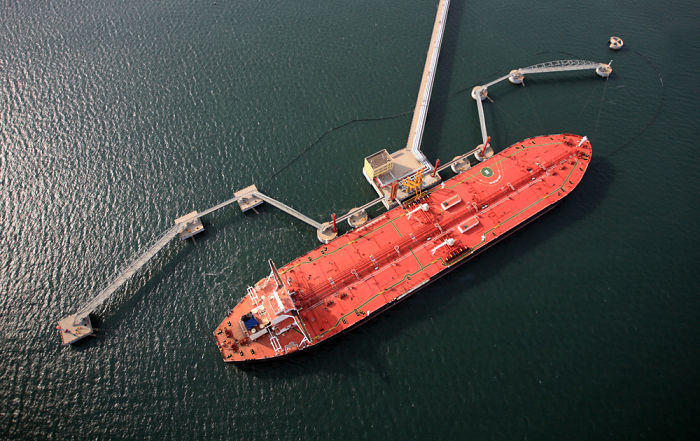
Recently someone asked me this question as to why there are very few new ULCCs? Why most of the ULCCs were built in 70s ? I considered the question to be a topic of one of my blog. This blog is the answer to that question.
Well generally speaking the decision of ordering a particular size of a ship depends upon
1) Technological advancement or feasibility and
2) Economical viability.
There are no problems technologically to build largest crude oil tanker of the world never built but the question is “would it be economically viable?” and the answer is NO.
The economical viability is again dependent on
1) Costs related to transporting a cargo on a route
2) The demand of the cargo
A model of estimated costs to transport per tonne cargo developed from the Evans & Marlow’s model of maritime economics revealed, “ As the route length increases, the larger ships will have lower costs in transporting a unit cargo and there is optimum ship size for a route length”. So for to and fro route length of say 2000 mile, a VLCC would not be an economically viable option but for to and fro route length of 20000 miles, 180000 DWT tanker would be an ideal option.
Another factor that affects the ship size is the demand of the cargo and the ships to carry that cargo (Shipping is a derived demand). The unit costs I talked about earlier is based upon the assumption that ships will be fully laden in the voyage but if the demand is less and bigger ships move with half full, the inventory costs will offset the low unit cost of the larger ships on longer routes and hence if the demand is low, the ship size need to be smaller.
The demand in shipping is measured in tonne miles, which is equal to tonne of cargo carried, multiplied by the distance to cover in nautical miles.
Now to answer the question specifically, why the largest tankers were built in 70s. What is special event related to shipping in that era? The answer is closure of Suez Canal following Arab Israel war that forced the ships to route via cape of good hopes for transporting the crude oil from gulf to Europe and North America. This increased the shipping demand in terms of tonne mile as the distance increased. There was huge shortage of the tankers and crude oil prices skyrocketed. This was ideal time for the ship owners to order bigger and bigger ships as these ships could be employed on longest routes in a time with huge demand. This greed however later led to the biggest recession of the shipping industry in 80s because of over supply of the ships.
Food for thought: can you think how the discovery of shale gas in USA will affect the demand of crude oil in tonne mile and what effect this can have on the average size of the crude oil tankers in near future?