
Dummy blog test dummy version
Dummy blog needs to be added here.
All we want is to have the people willingly follow company procedures. Without being forced to do it.
Isn’t it?
Because if everyone followed procedures, safety would be guaranteed.
Yes, it is as simple as it seems.
Safety Culture on Ships: What are the ingredients?

Have you ever watched a cookery show where they teach you how to cook a dish?
If you had your eyes on that kind of show for a split second, you would know that the first thing they tell you is “what all ingredients would you need to cook that dish”.
Join now to access this article and much more.
Admin has placed this article behind a paywall, making it accessible only with a paid membership, which offers numerous perks:
- Contribute to creating a platform for reading and writing without ads.
- Enjoy all content here, including exclusive articles for members.
- Gain access to all exclusive articles for members.
10 ECDIS questions SIRE inspectors ask and how to deal with it?
I cannot tell you how much do I enjoy writing on ECDIS.
I truly feel that ECDIS has made the navigation so much safer.
Well, many still do not agree with this statement and I respect their opinion too.
There is definitely merit in their opinion if that is based on the fact that not many officers are trained to handle the ECDIS in the right way.
I personally have seen a few officers sweat out in front of SIRE inspectors when they ask the questions related to ECDIS.
But they sweat out because they have not been adequately trained. And even if they wanted to self-train themselves, there is hardly any user-friendly information available.
But not anymore. No more sweating out for ECDIS questions.
In this blog, we will discuss all that SIRE inspectors ask a 2nd mate during his bridge inspection.
And I will discuss these with respect to JRC ECDIS.
So let us start with our first question.
Question 1: Can you show me the last passage plan on ECDIS?
This is the first question and this is the most important one too.
The passage needs to be accurate must follow all the company requirements and must be in accordance with the industry guidelines.
I have covered the general passage planning in this blog and ECDIS passage planning in this one.
Do read these two blogs to get to know about the passage planning.
But you must cover these areas in the passage plan on ECDIS.
- The route
- Parallel index lines
- No-Go Areas (not excessively marked)
- Wheel over position
- Abort point
- Marking of bridge watch levels
- Position plotting interval and method at each leg
- Security levels and the points where vessels need to be hardened.
- Point for notice to the engine room and calling the master
Question 2: Do you perform a route check? How do you do it?
Route check is a function of the ECDIS which checks the route and gives all the alarms for which the route is passing through any dangers.
The 2nd mate then can check each of these alarms to see if the route needs to be amended.
To perform the route check, open the route in the table editor and click on the “Safety Check”.
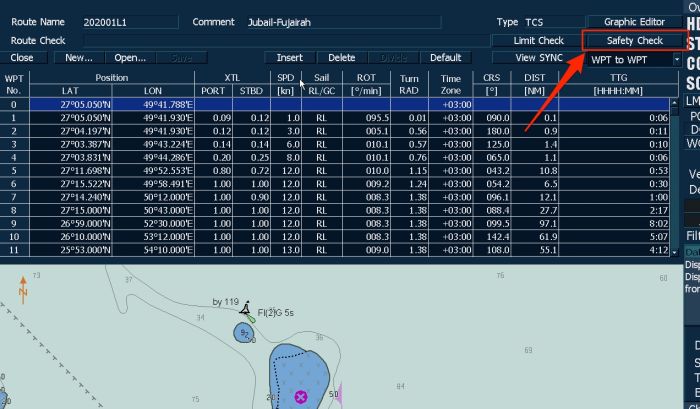
This would give all the errors in the route. If we select on an error and click on “Jump” the ECDIS screen will jump to the area of that error.
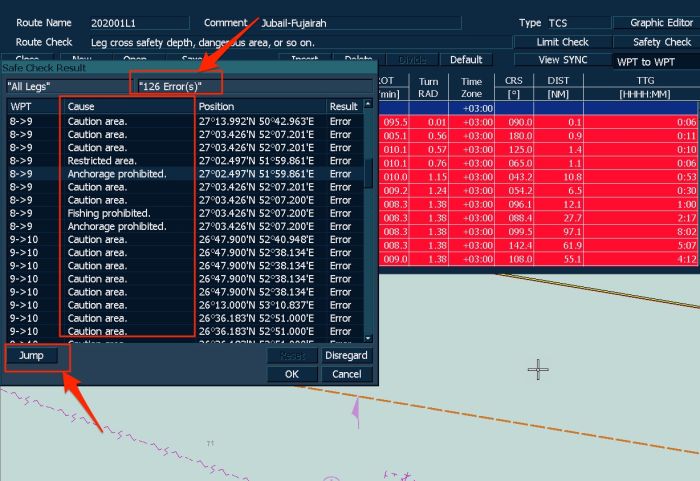
2nd Mate can then see if that error is applicable to us or if the route needs to be amended to avoid that.
2nd Mate needs to check each of these errors one by one to ensure that our route is safe.
Question 3: How do you make sure your ENCs are corrected up to date?
To check if the ENCs are corrected up to date on JRC ECDIS, go to 6.Chart -> ENC update report.
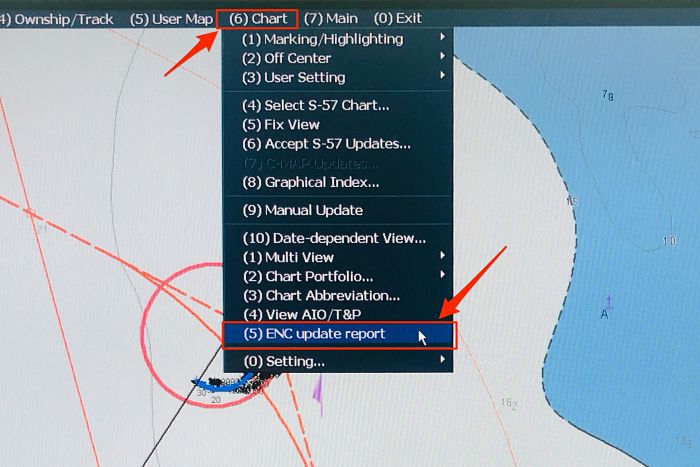
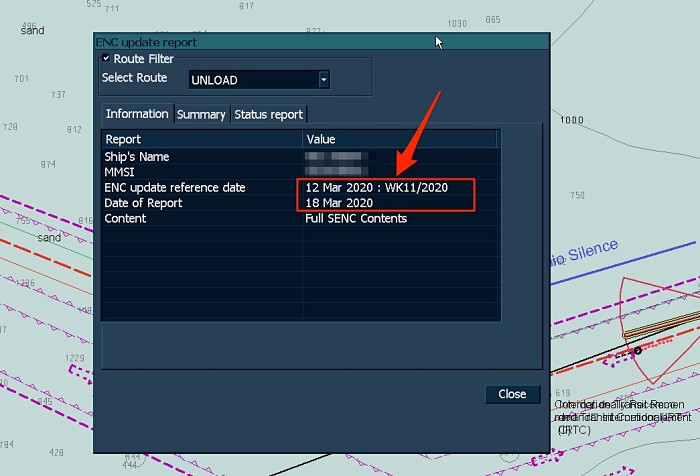
This will show you the status of all the ENCs and the week number these ENCs are corrected up to.
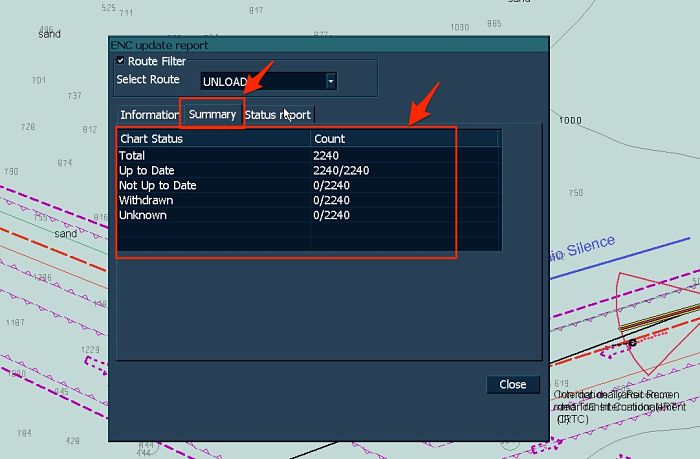
Go to Summary and it will show you the total number of ENCs and how many of these are up to date and how many are not up to date.
If you would like to see the status of ENCs for a particular route only, make sure to tick the “route filter” and choose the route from the “select route” dropdown.
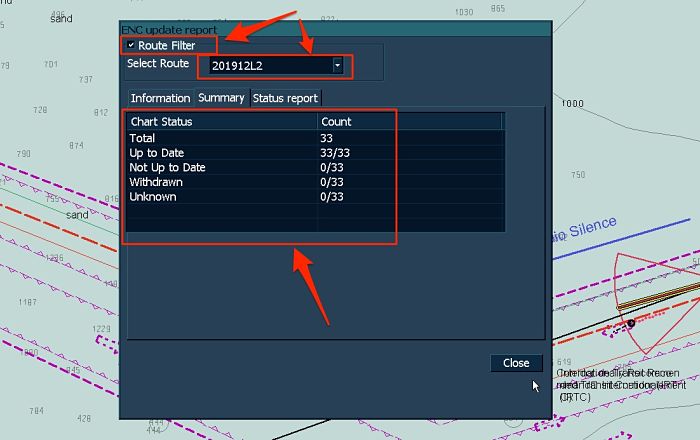
This will give the ENC status report for the ENCs for the chosen route.
Question 4: How do you know if you have all the required ENCs for the route?
The ENC ordering process depends upon your ENC provider.
For example, chartco would have a different procedure for ordering the ENCs and NAVTOR has a different procedure.
But once you have ordered, received, and updated ENCs in ECDIS, we need to check if the ECDIS has all the ENCs for the next voyage.
Ideally, when we check the ENC update report with route filter and if any ENC is missing, it would show that in this report.
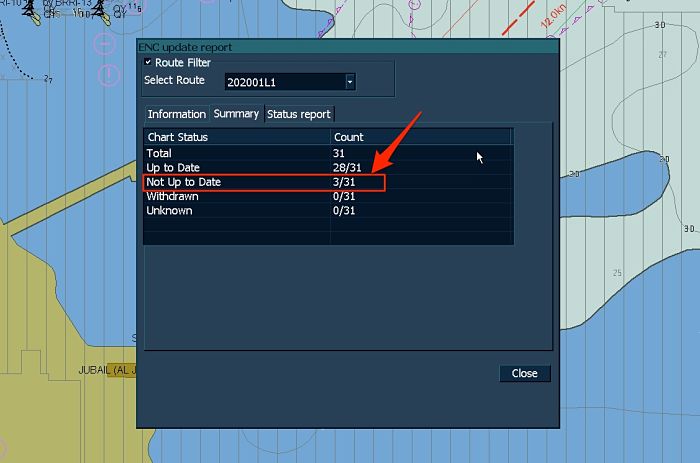
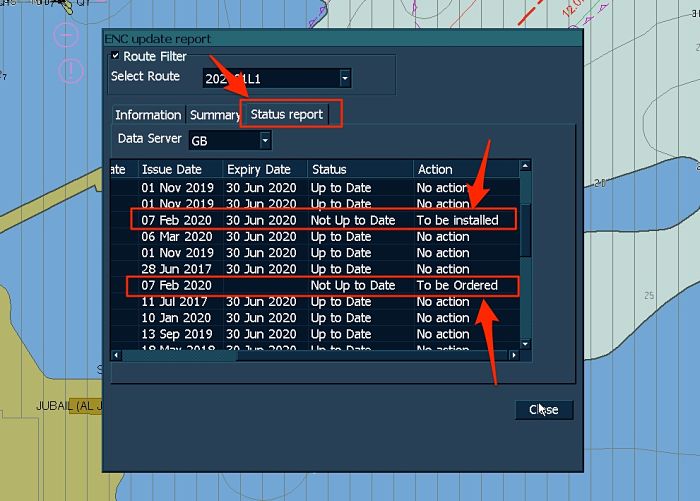
And when we go to “Status Report”, this would give a clear reason for the “ENCs not up to date”.
But with this function, it is only checking ENCs for the route with the set “Cross-track error” in the ECDIS for that route.
So if we have set the cross-track error as 1NM, this would only check the ENCs for 1NM from the route.
But that is not enough. We need to have the ENCs for up to at least for few miles from our route.
I prefer to have ENCs for at least 50NM from our route.
This would mean that in case we need to deviate the ship for any unforeseen reasons, we still have the ENCs for at least 4-5 hours of the deviation.
One way of checking this is to temporarily increase the cross-track error limit in the route plan. Then check the ENC status report with route filter.
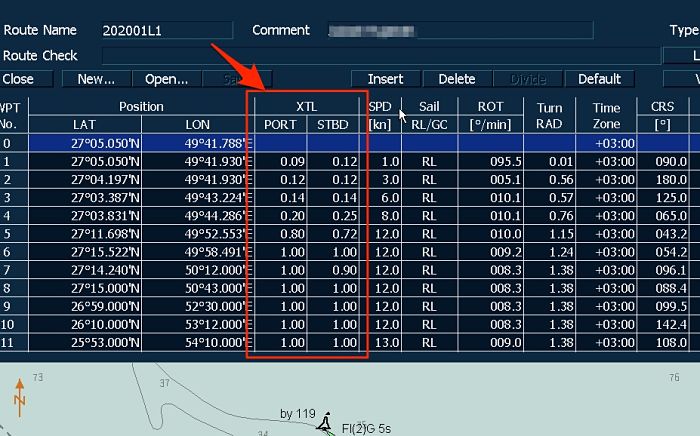
If the report shows all ENCs up to date then the ECDIS has the ENCs for the route and up to the (large) cross-track error set in the route plan.
But some ECDIS has a limitation of maximum cross-track error that can be set.
So the other way is to get the list of all the ENCs for the route from ENC provider software (Chartco/Navtor etc) and check physically if these are available in the ECDIS.
If your company subscribe to PAYS (Pay as you go), you only need to check this for ENCs that are not available under PAYS.
Question 5: How do you plot the Navigation warnings
I have covered this topic in detail in a different blog.
Read it if you have any doubts about how to plot navigation warnings on ECDIS.
Most of the SIRE inspectors would want to see the navigation warnings being plotted with “manual update”.
But I and you know that at least on JRC ECDIS, it is much easier to plot the navigation warning with the user chart.
The problem with the user chart is that it would not generate an alarm during the route check feature or when you are using the look-ahead feature.
So if you are plotting the navigation warning with the user chart, you must have an answer ready for the SIRE inspector.
The answer for “how do you make sure that route does not pass through dangerous navigation warning plotted with user chart”.
And your answer could be that you check that manually during the passage planning stage.
Question 6: What IHO presentation library your ECDIS uses? Can you show me?
In layman’s terms, the IHO presentation library is the set of instructions to the ECDIS manufacturers about how the various symbols must be displayed on the ECDIS.
For example, what color, size, and shape of the symbols must the ECDIS show on ECDIS.
ECDIS manufacturer needs to develop its software as per these set of guidelines developed by IHO.
From 2nd mate and seafarer’s point of view, we must know what presentation library version our ECDIS has.
And if that is the latest IHO presentation library?
If the vessel is not able to show this information on the ECDIS, not only this be a SIRE observation but during PSC inspections this can be detainable deficiency too.
So let us check what presentation library this JRC ECDIS has.
On the ECDIS screen, right-click and choose “S-57/C-MAP/ARCS Information”.
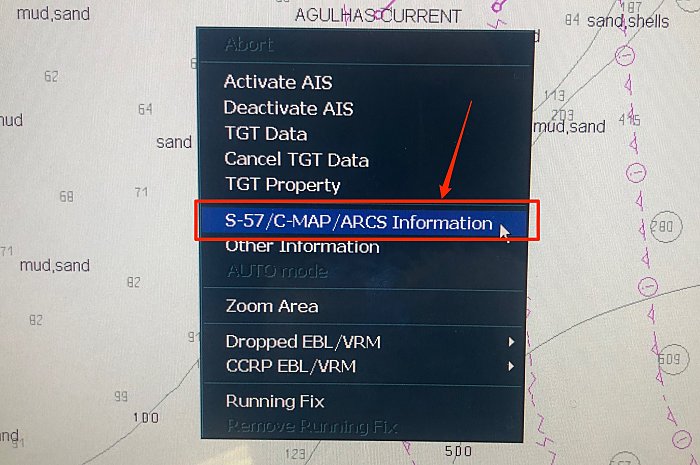
Go to “Chart legend” and there you will get the “Presentation library version”.
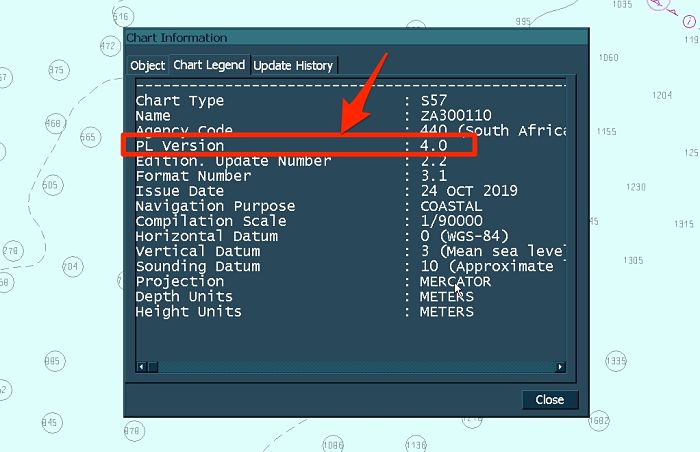
Apart from this, you need to know what is the latest version of the presentation library so that you know your ECDIS has the latest version .
We can get the information about the current version of the presentation library from the IHO website, by contacting the ECDIS maker or simply by asking your company.
Question 7: How do you plot position from sources other than GPS?
We need to be able to plot position on ECDIS from sources other than GPS.
The sources like visual bearings, range/bearings, and celestial observations.
While the procedures may be different on different ECDIS but if you are actually using these features to plot positions, it would be easier for you to show it to the SIRE inspector.
Here is a blog that I wrote on position fixing sometime back that includes position fixing on ECIDS.
Question 8: What ECDIS safety settings are entered during arrival to this port?
Here is a detailed article on ECDIS safety settings that I had written earlier.
I assume that you know everything about ECDIS safety settings. Like what are these safety settings and what value to set for these settings in the ECDIS.
If you have any doubts, do read the blog on ECDIS safety settings first.
But even when 2nd mate knows about safety settings, there is one mistake that I see them making repeatedly.
The mistake is to keep the safety settings constant for the voyage.
The ECDIS safety setting needs to be dynamic. These need to be changed during the voyage even when the vessel’s draft remains the same.
Usually, the safety settings are calculated with zero height of the tide.
At the open sea, the vessel’s route must be in safe waters with these safety settings at zero height of the tide.
But that is not the case with port arrivals and departures.
If the vessel needs to use the height of tide for compliance with the company’s UKC policy, then the safety settings need to be changed to include the height of tide too.
Mere doing the UKC calculation with the height of tide is not enough.
Let us say that for a river port we did the UKC calculation with the height of tide as 3 meters and UKC is complying with the company’s UKC policy.
Now, this is the ECDIS route for this river port with initial safety settings (without the height of tide).
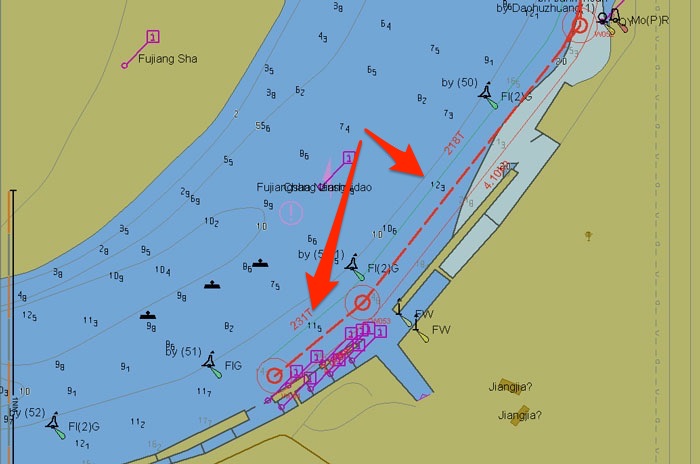
This would be a SIRE observation.
Because while navigating at no point in time we can pass over the depth less than safety depth.
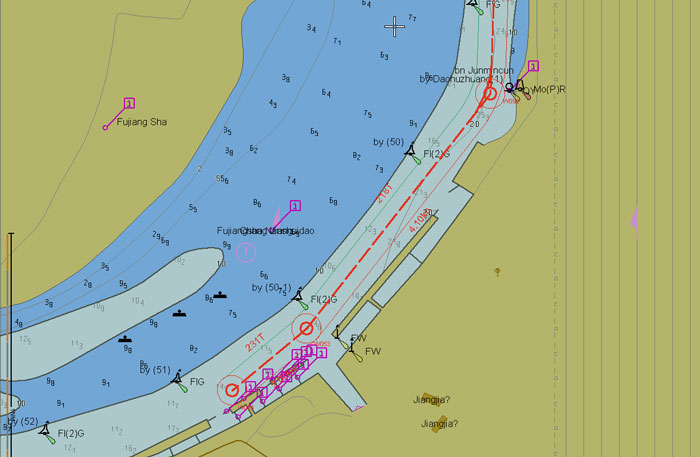
Let us say the safety depth calculated and entered here was 13 meters. And if the height of tide while passing this point was 3 meters, we need to adjust (reduce) the safety settings by 3 meters.
In this case, the same ENC would look like this.
As a practice, we can prepare a list of points (waypoints) where the safety setting needs to be changed (taking into account the tide).
Question 9: What procedure you follow when the route crosses safety contour?
A vessel outside the safety contour is in safe waters.
But that does not mean that all the waters in the safety contour are not safe.
For example, if we have calculated safety depth as 11 meters then the nearest safety contour will be 15 meters.
But what if the depths inside the safety contour are in the range of 13 to 14 meters.
These depths are still safe for us because these are more than our safety depths.
On ECDIS, the unsafe depths (depths less than safety depths) are shown in dark black color and safe depths are shown in grey color.
ECDIS is supposed to give an alarm when the vessel crosses a safety contour.
But after the vessel has crossed safety contour there would be no alarm in case the vessel is about to run into danger such as crossing an unsafe depth.
For this reason, we are required to define the procedure we would follow after crossing the safety contour to ensure that ship navigates safely.
There are two methods to choose from.
Method 1: After crossing safety contour, Navigator needs to be more alert and ensure that the vessel does not run over a depth lesser than safety depth.
This method is based on the careful review of the navigator while navigating in the area after crossing the safety contour.
Method 2: Or we can use the 2nd method where during the planning stage, 2nd mate draws a line with a manual update separating the safe and unsafe areas.
In this case, we need to use the manual update feature so that we can get the alarm on the ECDIS if the vessel crosses this line.
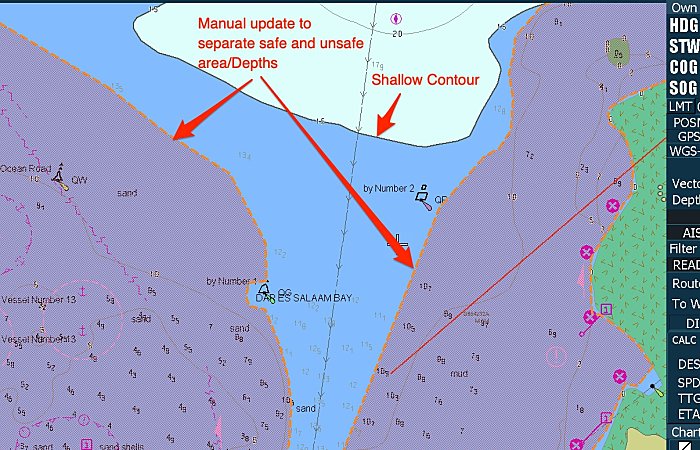
It is also required that the company must document in their procedures as to which method the bridge team should use.
Some companies may direct the master to choose any of the above two methods.
Question 10: What is scamin and how do you use it?
Let us consider a buoy in an ENC.
ENC maker would have defined a minimum (SCAMIN) and maximum (SCAMAX) scale of ENC at which this buoy would be visible on the ENC.
Let us say the minimum scale set by the ENC maker is 1:50000.
This means that if you zoom the ENC scale to less than 1:50000, this buoy would not be visible on the ENC.
Likewise, there could be so many other features (certain soundings, buoys, pipelines, cables, etc) for which ENC makers have defines a minimum and maximum scale for its visibility.
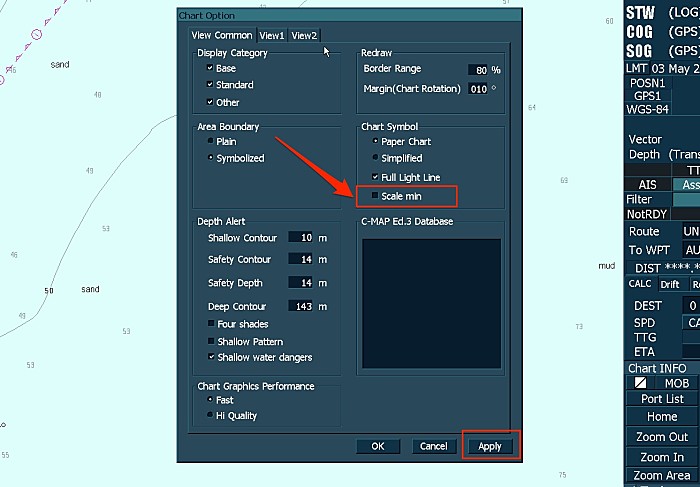
However, if we keep the SCAMIN setting to off, irrespective of how much you zoom in or zoom out, none of these features will disappear.
Let us first see how to switch it on or off on JRC ECDIS.
Go to Menu 6.Chart -> Settings -> S-57/C-MAP/ARCS Information
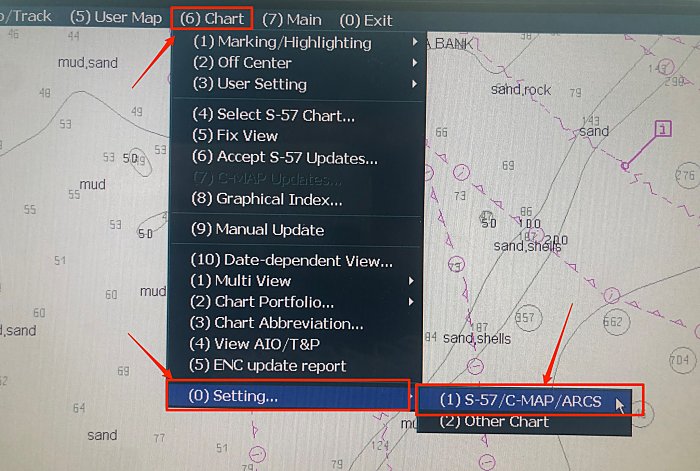
From the option “View Common”, you will find the option to turn on/off the Scale min under “Chart Symbol”.
But why this feature is given at all?
This is to give an option to the navigator to de-clutter the screen so that it is more user-friendly during the navigation.
Now the question is what is the correct way to use SCAMIN.
During the passage planning stage, we do not want to miss any of the features or buoy, etc as we do not want to have our courses run over these.
So during the planning stage, we are expected to keep the SCAMIN off.
During navigation, we can keep the SCAMIN to “on” to declutter the ECDIS screen however if we need to go away from our intended route for some reason, we must turn off the SCAMIN to review the area.
Conclusion
Nowadays, ECDIS is the main area of interest for SIRE inspectors when it comes to bridge/navigation rounds.
Though it may sometimes seem too much to cover in ECDIS but if you have your basic questions about ECDIS covered, there is nothing to sweat about for ECDIS.
Safety Culture on ships: It is all about the trade-offs
A few years back, I did extensive research on “safety culture in shipping” as part of my project for higher studies.
I was so fascinated with this subject that I continued reading about and exploring it.
And while I was doing all that, I found that in the present form no sane seafarer or shore representative would show any interest in the concept called safety culture.
They can fake it though.
Few who would show the interest will surely see their interest die down very soon.
The only community to have their interest in this subject for a long time is the “management students” and ‘people at a higher level of organization hierarchy”.
Why?
Because most of the time safety culture is not discussed in a simpler language, the language that I, you and most of the people would understand.
For example, here is one of the definitions of safety culture by “health & safety executive” website
The safety culture of an organisation is the product of individual and group values, attitudes, perceptions, competencies, and patterns of behaviour that determine the commitment to, and the style and proficiency of, an organisation’s health and safety management.
The definition is definitely good and leaves nothing to doubt. But if you show this definition to the seafarers, they would say…Oh yeh!! but we have some work to finish.
If we want to bring a safety culture on our ships we need to involve our seafarers and the first tier of shore staff.
We cannot do that without them understanding the concept of safety culture.
So what is safety culture?
What is the safety culture?
Here is the simple definition of safety culture.
Safety culture is the environment on the ships where ship’s staff perform each task with the required safety measures even in situations where bypassing the safety seems to be a much convenient and quicker option of completing the task.
Here is another definition.
In situations where a trade-off is required between two things (one being safety), if the company or the ship management always choose “safety”, that ship or the company is said to have a good safety culture.
Are you ready to trade-off a few benefits for safety?
Let us take the example of enclosed space entry.
Entering the enclosed space without safety precautions is much easier. Just imagine how many tasks we do not have to do if we choose to enter enclosed space without following safety precautions
- We do not have to bring and keep SCBA near to the entrance.
- We do not have to bring the gas meter and check the gas levels in the compartment
- We can use the person required to be standby at the entrance of enclosed space for some other important work and thus increase the output for the day.
Definitely, entering a space without proper procedures can save a lot of time and resources.
But do we always trade-off all these benefits with safety? Are we willing to let go of these benefits for the sake of safety each time?
In a safety-conscious environment, the answer would always be a “Yes”.
Do you trade-off your “convenience” for safety?
This was just one example.
Let us take one more simple example.
You are the master of the ship having a chat with the chief officer in the CCR. Now chief officer wants to show you something on the main deck.
Problem is that you are not in proper safety dress to be able to go on deck. And it is neither available in CCR nor is there anyone else who can get it for you quickly.
It is inconvenient for you to go to your room to put on your safety shoes and helmet. It is convenient to just go on deck and have a look at whatever the chief officer is trying to show you.
Are you willing to trade off your inconvenience for safety?
On ships and companies with good safety culture, people are willing to trade-off something good for safety. And most importantly they do so even when no one is watching them.
Do the company always a trade-off “costs and budget” for safety?
It is not always with the ship staff. A company with a good safety culture is always ready for the trade-off when it comes to safety.
Here is an example.
A day before arrival at a port, the engine governor had some issues and because of that engine could only be operated locally (in emergency mode). Spares are arranged at the next port of call.
If the issue is reported to the port authorities, port authorities would require the vessel to be escorted by a tug in the channel and an extra tug for berthing.
This means the extra costs of thousands of dollars.
The company can save this cost if the issue is not reported to the port authorities. Not only that, but the company also saves a lot of effort to explain to the shipowners the conditions that led to this situation.
The only question is, Will the company trade these costs and efforts for safety?
In a company with a good safety culture, safety would be chosen without any discussions. Not reporting to the port authorities will not be an option.
In fact, in a company with good safety culture even when the port authorities do not require the tug to escort the vessel, they will carry out the risk assessment and request for an escort tug if it is necessary.
Choosing the safety in a trade-off: Always
Now you may remember the situations in your company or the ship where you or your company chose safety when it could have traded that for something more lucrative.
But that does not mean your ship or company has an excellent safety culture.
Safety culture has levels.
In an excellent safety culture, the winner of the trade-off does not change with the situations. Safety is always the winner, every single time.
IMO definition of safety culture
IMO defines the safety culture as
An organization with a “safety culture” is one that gives appropriate priority to safety and realizes that safety has to be managed like other areas of the business. For the shipping industry, it is in the professionalism of seafarers that the safety culture must take root.
If you look closely, IMO’s definition too implies that in situations where the trade-off is required, safety is the one that wins (priority to safety) in an organization with a safety culture.
Safety culture – Who is the Odd man out
Let us come back to the example where the master needs to go to the deck with the chief officer but his safety gears are in his cabin.
There could be three possibilities in this case.
- Master may decide to delay his going to deck for the time being as he does not have the safety gear and he does not wish to climb up to his cabin to bring that.
- Master may decide to get his safety gears and then go to the deck with proper safety gears
- Master may go to the deck without safety gear
In the first two possibilities, the master can assume to be safety conscious. But that does not mean that the ship has a good safety culture.
Safety culture is not about individuals. It is about the mindset of the entire crew and employees of the company.
And as another definition of HSE says, “safety culture is about how things are done around here”.
In our example, safety culture is about the reaction of the chief officer (and other crew presents there or those who get to know this later).
From the three possibilities, with what action of the master will the master find himself as an odd man out in the ship’s environment?
Which actions of the master would the crew find out of the ordinary? Which actions would raise their eyebrows?
If the master finds himself as an odd man out if he goes to the deck without safety gear, the ship has a good safety culture.
In fact, in good safety culture, the master would be stopped from going to the deck without safety gear.
The environment or the culture of the workplace (ships in our case) plays an important role in changing the mindset of the odd man in the environment.
The odd man in culture will very soon find himself changed and dissolved in the prevailing culture.
This means in a bad safety culture a safety-conscious seafarer will soon find himself behaving in an unsafe manner.
Similarly, in good safety culture, a seafarer with unsafe behavior will soon find himself behaving in a safe manner.
Relation of Safety culture with non-safety issues
Irrespective of how odd it may seem but the safety culture has a direct relation with non-safety issues in any company.
Well, I am not saying it. M.D. Cooper, a safety culture expert said it. He said…
Safety culture does not operate in a vacuum: it affects, and in turn is affected by, other non-safety-related operational processes or organizational systems.
In Maritime context, these non-safety related operational processes could be something like
- how well the seafarers are treated by the crewing department.
- Welfare schemes provided to the seafarers by the company
- MARPOL compliance standards of the company and crew
- Inter-departmental relations in a company.
All these are some of the non-safety issues but all these contribute and affect the safety culture onboard ships.
Promoting safety culture on board ships?
Having a good safety culture onboard ships is something that everyone desires.
After all, it does not cost a dime and saves a lot of injuries, insurance costs and improves the brand image of the company.
But having a good safety culture is difficult in any industry.
How can people in a system influence the behavior of other people in the company? In the present times where hierarchies are diminishing, this looks to be a daunting task.
If that sounds difficult, how about the maritime industry where the people who would want to have an influence (Shore staff) are working thousands of miles away from the people who need to be influenced (ship staff).
For this reason, improving the safety culture in the maritime industry is more difficult than any other industry.
In future articles on this blog, I will simplify the process of improving safety culture onboard ships.
Conclusion
The benefits that having a good safety culture offers outshines benefits earned from any other concept.
There are a few reasons that in spite of bringing so many benefits, the companies are hesitant to invest in safety culture.
One because the benefits of a good safety culture are indirect.
Second because it requires the companies to sometimes let go few benefits whenever a trade-off is required with safety.
But if you are ready for these trade-offs, be ready to earn the benefits.
IMO Sulphur 2020 and FONAR: All you need to know
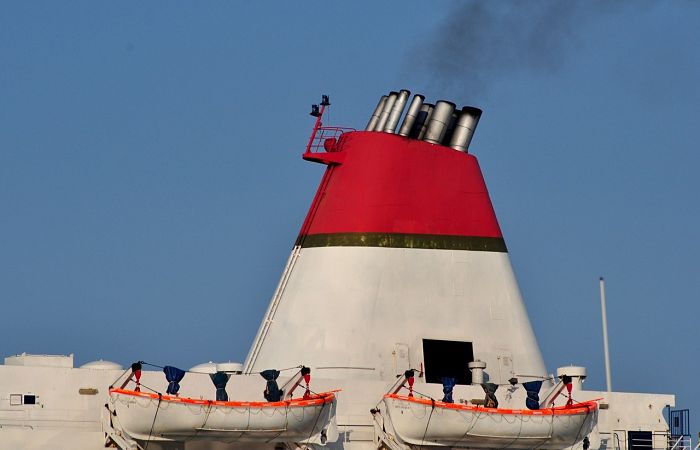
IMO Sulphur 2020 has been the keyword for the year 2019.
Rightly so. After all, the deadline for switching over to the low sulphur fuel was fast approaching.
In layman’s terms, after 01st Jan 2020, all vessels need to use fuel with sulphur content less than 0.50% m/m.
By this time, most shipowners already have a strategy in place to comply with this regulation that came in effect from 01st Jan 2020.
The strategy would most likely be among one of the following
- Supply low sulphur fuel
- Install the exhaust gas cleaning system (Called Scrubbers)
- Change over to alternate fuels like LNG
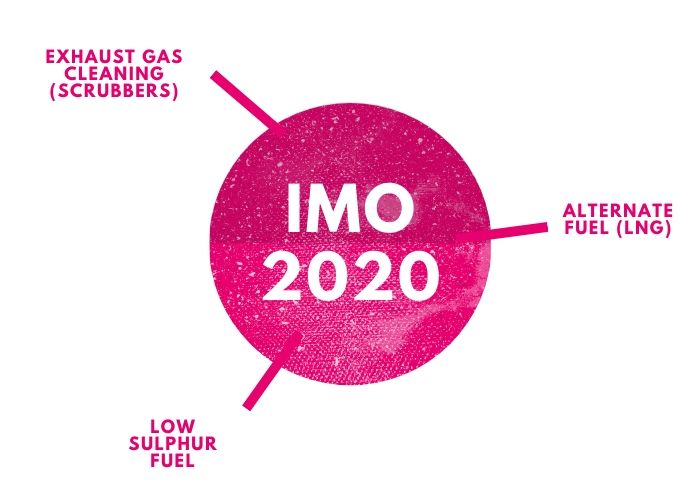
Each option has its own merits and demerits which I have discussed in another blog on IMO Sulphur 2020.
But the shipowner’s and ship manager’s challenges do not end with the choice of the above options.
There are more challenges ahead, beyond 01st Jan 2020.
Challenges beyond 01st Jan 2020
The biggest challenge that all stakeholders may face is the availability of low sulphur fuel.
I am not talking about a few ports which would not have the infrastructure in place to supply low sulphur fuel.
Shipowners and managers can take care of that.
When the shipowners know about these ports they would make arrangements for bunkering at a different port in advance where low sulphur fuel will be available.
I am talking about last-minute changes.
Let us say a ship is scheduled to receive low sulphur fuel at a port.
And when the vessel arrives or is about to arrive at the bunkering port, the bunker supplier informs that the low sulphur fuel is not available.
The ship does not have a sufficient quantity of fuel onboard to reach a port where low sulphur fuel is available.
Or the diversion is way too much for the alternative port of fuel supply.
Shipowners would be in a fix.
It is not that I am the inventor of the above situation.
IMO has assessed this situation and put the measures in place to address this situation.
The measure to address this situation is Fuel Oil non Availability Report (FONAR).
FONAR comes to the rescue
FONAR stands for Fuel oil Non Availability Report.
In case the compliant fuel is not available, the vessel is not required to unduly delay or deviate from the intended voyage.
The vessel can arrive at the port with non-compliant fuel provided that the vessel and vessel managers have made all the efforts to receive the compliant fuel.
FONAR is a report that lists all the details of the voyage and efforts made by the ship operator to get the compliant fuel.
Each port state may have its own format for the FONAR but all would more or less contain the same information.
Here is one of the FONAR format.
FONAR is not an easy way out
We might think that life would be easy with FONAR.
We try to get compliant fuel, we do not get it and we receive high sulphur fuel and send the FONAR to the port state of the next port and that is it.
No, it isn’t that easy.
Sending the FONAR does not mean that we are allowed to use the high sulphur fuel.
It is completely up to the discretion of the port state
- if the vessel can be allowed to use non-compliant fuel
- If the vessel will be fined for use of non-compliant fuel
FONAR simply helps the port state to make that decision.
If the port state is completely satisfied with the efforts made by ship operators as described in the FONAR, the ship may be allowed to use non-compliant fuel without any penalty to the vessel.
If not, the port state may allow use with the penalty to the vessel which would depend upon the seriousness of the non-compliance.
It is entirely up to the port state to decide about the extent of the penalty.
That makes the FONAR so much important.
FONAR is an expensive tool
FONAR is considered to be an expensive tool shipowner should avoid.
There is a reason for that.
It is not about the penalty alone.
Some port states may accept the FONAR and impose no penalty at all.
But if the compliant fuel is available at the port of arrival, they may want the vessel to debunker the non-compliant fuel and bunker the required fuel.
This may require not only de-bunkering but also cleaning of the tank before compliant fuel can be bunkered.
Singapore is one such port where even when FONAR is accepted, it would be required to offload the non-compliant bunker and take compliant bunker.
This process could involve thousands of dollars and days of off-hire for the vessel.
So the best possible way is to avoid being in a situation where the use of FONAR would be required.
To be able to do that each stakeholder needs to take some kind of responsibility to achieve that.
Responsibilities of Master, chief engineer, and the ship
Master, chief engineer, and ship staff play an important role under FONAR.
Their role is that of proactive planning.
This includes
- Do not wait for the commercial operator to ask you about bunkers. Remind them instead well in time.
- Maximizing the bunkers in such a way that the vessel is not short of low sulphur bunkers for the entire voyage
- Proactively calculating the quantity of bunkers to receive at each bunkering port so that the vessel is not short of low sulphur bunkers at any time.
Let us cover this in detail.
Constant reminders about the bunkering activity
Even though bunkering is primarily the responsibility of the vessel’s commercial operator, it does not stop us from timely remind them.
Time is an important factor for the successful consideration of FONAR.
For example, if the communication between vessel and vessel operator regarding bunkering started just a couple of days before arrival the bunkering port, there could be no valid excuse for the non-availability of the fuel at the bunkering port.
And in this case, we can expect the port state to reject the reason for submitting the FONAR.
So the first responsibility of the vessel is to remind the vessel’s commercial operator regarding the bunkering at the next bunkering port.
Maximizing the bunkers
If a vessel is to load maximum bunkers, plan to receive maximum bunkers as per the company’s allowed limit.
If the company permits loading 95% of the bunker tank capacity, do not unnecessarily reduce the quantity to receive say up to 85% just because you do not want to trouble yourself to load 95% of the capacity.
For example, if the vessel has to submit FONAR because the vessel is short of 10-20 MT of low sulphur bunkers, FONAR could be rejected because of vessel short-loaded bunkers at last bunkering port.
Proactive bunker calculation
Loading maximum bunkers is not always a great idea.
We also need to consider to have at least one tank empty before arrival bunkering port with other bunker tanks close to full.
Let us understand this with an example.
A Vessel has 3 bunker tanks with capacities 500 MT, 450 MT, and 400 MT.
Vessel to receive bunkers at Fujairah with another bunkering option enroute in Singapore.
Vessel departs Fujairah with all bunker tanks full. Bunker consumption from Fujairah to Singapore will be about 300 MT.
On Arrival Singapore the vessel will have 500MT, 450 MT and 100 MT in the bunker tanks with no option to receive bunkers in Singapore.
Departure Singapore bunker onboard would be 1050 MT.
If the vessel had received 100 MT less bunkers at Fujairah, we would have one tank empty on arrival Singapore.
In this case, the vessel could have received 400 MT of bunkers in Singapore.
Bunkers onboard on departure Singapore would be 1350 MT instead of 1050 MT.
If after all the efforts, the ship has to receive non-compliant fuel, then it is the master’s responsibility to send the FONAR to its flag state and port state of their next port of call.
If this is sent by the company on the master’s behalf, the mast must ask the company to keep his email in copy or should ask for the email and FONAR report sent.
Responsibilities of Commercial Operator
With IMO 2020 the responsibilities of the commercial operators are going to increase.
Earlier the responsibility of the commercial operator was to get the fuel for the vessel.
Now apart from this, the commercial operator needs to make sure that not just the fuel but compliant fuel is received by the vessel.
This is because earlier fuel with more than 3.5% sulphur (non-compliant fuel) was not available globally.
But now even though the global sulphur limit is reduced to less than 1%, fuel with up to 3.5% sulphur content would still be available for supply to the ships using scrubber technology.
With respect to FONAR, having a contract with one fuel supplier is not considered to be a valid reason for the non-availability of the fuel.
For example, let us say the commercial operator of the vessel has a contract with one fuel supplier in Singapore.
This supplier was unable to provide the compliant fuel to the vessel for some reason.
In this case, it is the responsibility of the commercial operator to enquire with other suppliers in the port for the supply of compliant fuel.
This may be a little expensive option but if this is not done and vessel arrives at a port with non-compliant fuel and submits FONAR, it is most likely that the reason mentioned in FONAR for non-availability will not be accepted by the port state.
Responsibilities of Port state
There are two major responsibilities of port states with respect to FONAR.
First, they have to decide on the validity of the evidence presented in the FONAR by the vessel.
According to their judgment, they have to decide on the action required to deal with non-compliance.
Even though Marpol annex VI, regulation 18.2.3 urges the port states to not take any control measures if actions in FONAR are found to be appropriate.
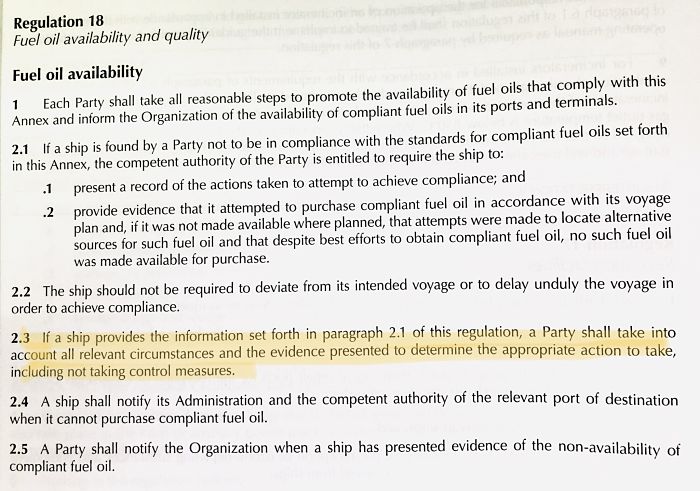
However, it is absolutely the port state’s discretion on what action they take.
The second responsibility of the port states is to notify IMO when any vessel has submitted FONAR.
IMO assesses the situation of fuel availability based on the FONARs that it receives.
Conclusion
The best way to use FONAR to our advantage is to never arrive in a situation that warrants the use of FONAR.
Everyone from the ship’s staff to the voyage manager and commercial operator plays an important part in achieving that.
And it is by being proactive to the extent that the vessel never is short of compliant fuel.
But sometimes situations are not our favor and we must bunker non-compliant fuel.
In this case, the master must fill the FONAR in a discussion with the company and commercial operator.
Master then must send the FONAR to the port state of next port and to the flag state of the vessel.
The important factor in the acceptance of the FONAR is if the vessel had made all the efforts to get the compliant fuel.
How to know the worst case of damage stability?
Since the day I have started writing, I get a lot of requests suggesting the topics I should write on.
But do you know which question I have been asked the maximum number of times?
No prize for guessing.
It is this question.
How to know the worst case of damage stability?
Well, It is today that I decided to write on it in detail and explain it.
Are you ready to read the answer to this most mystic question?
Let dive in.
Requirements of damage stability
A ship that can float cannot always be said to be a safe ship.
It must also be able to remain afloat even after sustaining some amount of damage.
Damage stability calculations are all about getting to know if the vessel will remain afloat after sustaining some damage on its hull.
That is what SOLAS, MARPOL (For tankers) and IBC code (For chemical tankers) does.
All these regulations define two things
- the extent of damage that needs to be assumed.
- Sustainability criteria for the assumed extent of damage
For the vessel to comply with damage stability, it should be able to achieve the sustainability criteria after the assumed extent of the damage.
Extent of damage
Let us see the defined extent of damage as per various regulations.
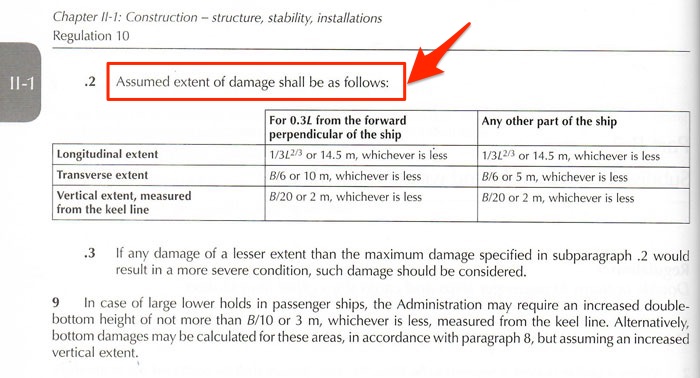
Assumed Extent of damage as per SOLAS
Here is the extent of damage defined in SOLAS for cargo and passenger ships without a double bottom.
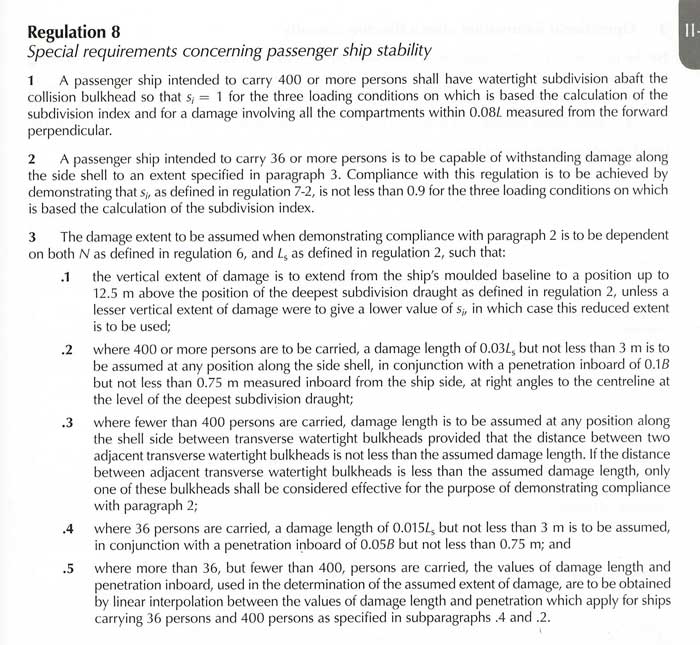
Below is the required extent of damage to be assumed for passenger ships
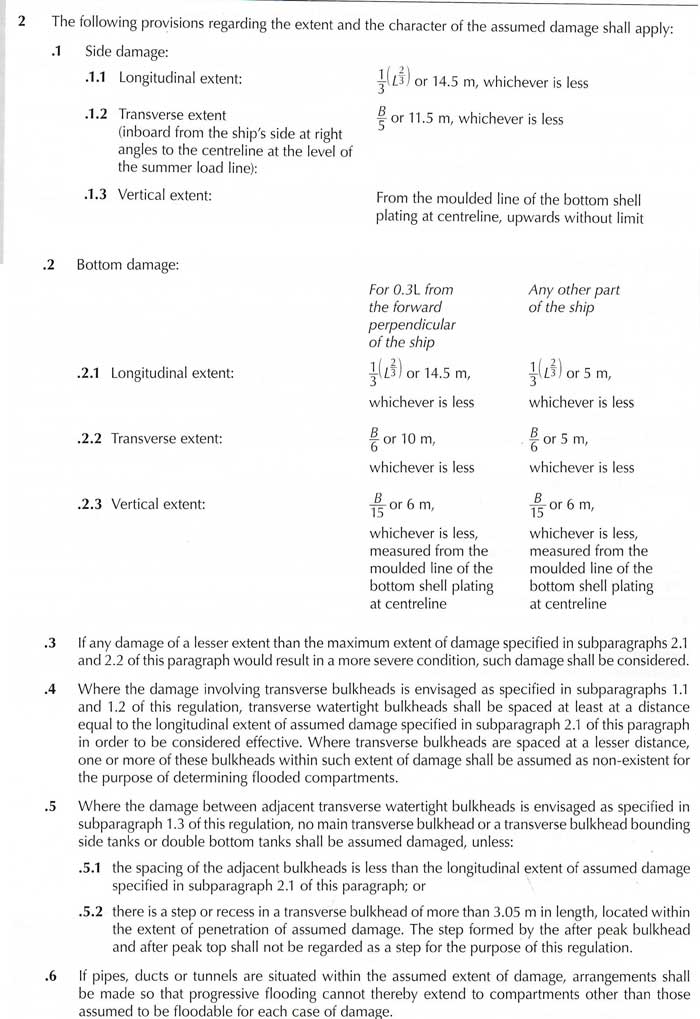
Damage stability requirements in MARPOL
The required assumed extent of damage defined in MARPOL annex 1 for oil tankers is as below.
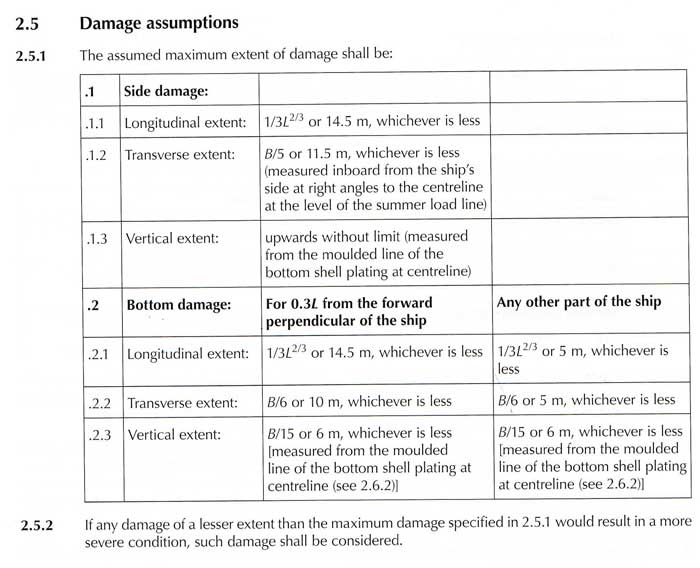
The assumed extent of damage as per IBC code
The required assumed extent of damaged defined in IBC code for chemical tanks is as below
Damage cases as per the assumed extent of damage
Based on the damage assumption requirements, damage cases are created for the vessel by the class.
You can see these cases in damage stability calculations, either in loadicator or in damage stability booklet.
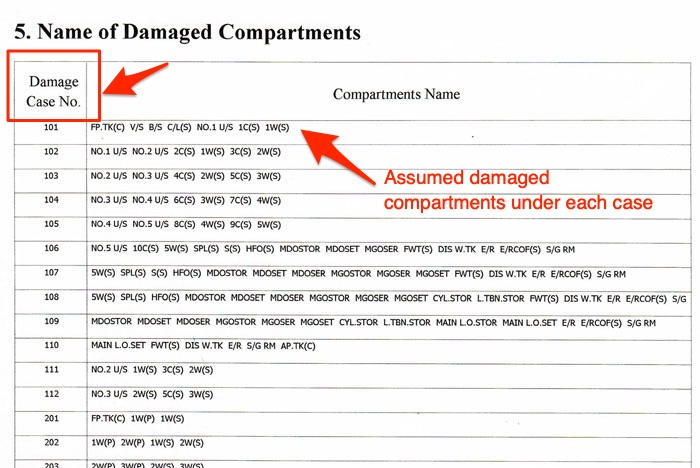
Here are the few of the damage cases from one of the vessel.
Damage stability for each damage case
For the vessel to comply with damage stability requirements, for each damage case, the vessel must comply with the damage stability requirements under MARPOL annex 1 (for oil tankers) and under IBC code (for chemical tankers)
What does this mean?
Let us take the damage case 201.
In this case, FPTK, 1W(P) and, 1W(S) are assumed to be damaged.
If after this damage, vessel still complied with the damage stability survival requirements as set in MARPOL, IBC code or SOLAS (as applicable), the ship can be said to be complying with the damage stability with reference to damage case 201.
These calculations need to be done for each damage case and ship need to be complying with damage stability survival requirements for each of these damage cases.
If even one case does not comply then for this stowage vessel will not be complying with damage stability and we need to make changes to the stowage and again check for the damage stability.
Of course, manual calculations are not required and lodicator does these calculations for us.
And after calculations, it just shows us if the for the intended stowage if the vessel is complying with damage stability or not.
Survival requirements
But what are the required survival requirements?
That is, after the assumed damage under each damage case what all stability requirements vessel need to fulfill for it to be considered complying with damage stability?
Here are the survival requirements as per the IBC code.
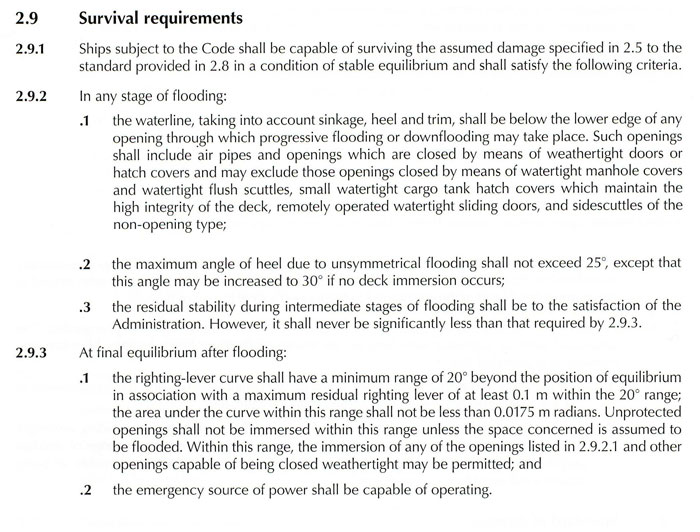
And here are the survival requirements as per MARPOL.
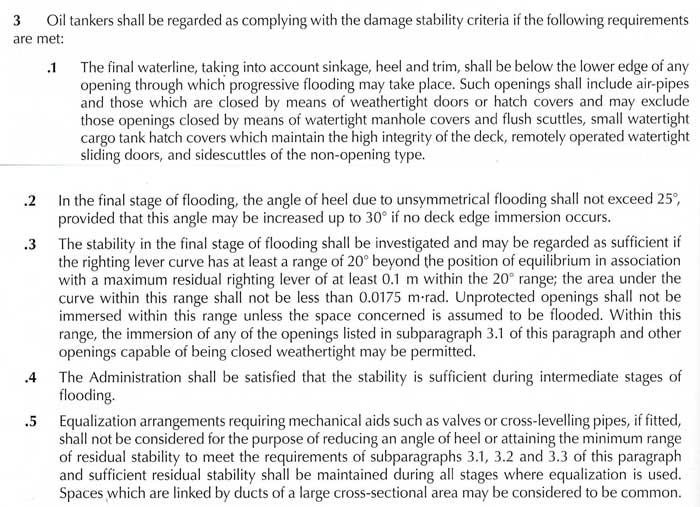
Although the MARPOL and IBC code requirements are for oil tankers and chemical tankers respectively, if you look closely there are a lot of similarities in the two requirements.
Deciding Factors for damage stability compliance
If we need to know the worst case of damage stability, we need to first bring all the deciding factors on the table.
Let us see which are the deciding factors for damage stability compliance.
Look at the survival requirements as per IBC and Marpol and you would know that these are
- The distance from the waterline to the opening through which progressive flooding can take place
- Angle of heel
- range of righting lever curve (GZ curve)
- Residual righting lever
- The area under the GZ curve
Contrary to the belief of many, GM of the vessel does not represent here as a factor for deciding the damage stability.
But as the GZ curve and GM of the vessel has a direct relation, we can say that GM indirectly affects the damage stability.
For the scope of this article, I will not discuss here the relation between GM and GZ. I will leave that for some other day.
So if there is anything that decides the worst case of damage stability it has to be one or more of the above factors.
Which one(s) is that? Let us find out.
Right Lever, Range under GZ curve, area under GZ curve
What is GZ and why it is important?
GZ is righting lever. It is the force that brings the ship back when inclined to an angle by an external force.
In simple words, the centre of gravity (G) of the ship for a particular condition remains the same.
Whereas the center of buoyancy (B) changes with the heel as the underwater area would change when the vessel is inclined.
This generates a lever (GZ) that brings the vessel back to normal.
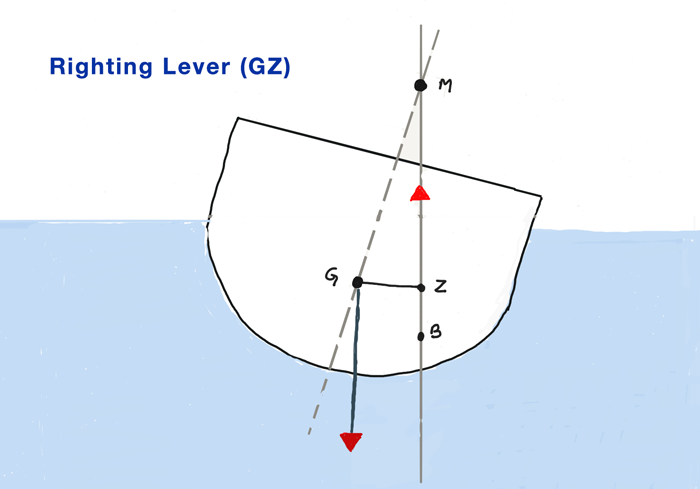
GZ would increase as the angle of heel increases because with an increase in the heel the center of buoyancy would shift farther from the center of gravity.
GZ curve is the curve drawn for the length of the righting lever (GZ) against the angle of heel.
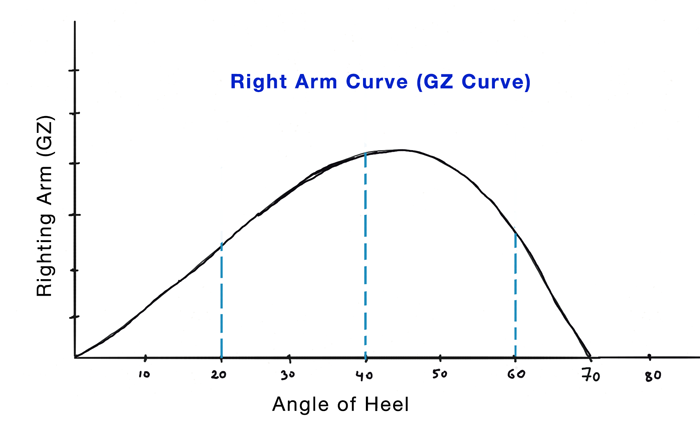
The area under the GZ curve at an angle of heel is simply the area of the curve from 0 deg heel to that angle of heel.
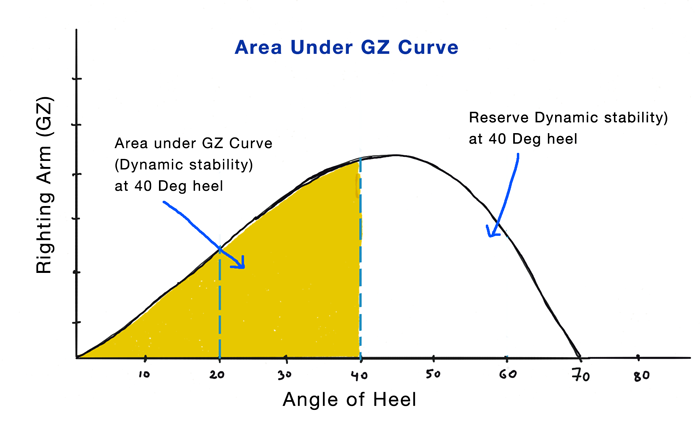
The significance of the area under the GZ curve is that it represents the amount of work required to bring the ship to that angle of heel.
In other words, it will also be the force available to bring the ship back to its original position or the force available to counter the external force that is causing the ship to heel.
GZ and damage stability
So when a ship is damaged and is arrived at equilibrium, one thing we want is it to have some dynamic stability to withstand the usual weather conditions.
In simple words, in damaged conditions, if the vessel does not have any dynamic stability then a slight increase in the heel due to weather conditions can capsize the vessel.
The minimum dynamic stability required after the assumed damage cases is defined in MARPOL and IBC.
I do not have the calculations to show how severe weather conditions the vessel can survive with these minimum values required as per MARPOL and IBC code.
But we can believe that IMO came to these values to ensure that the ship can withstand normal weather conditions at sea.
The distance from the waterline to the opening through which progressive flooding can take place
Apart from GZ and related criteria, there are one more criteria that are required to be fulfilled for the vessel to comply with damage stability.
This is…
“The distance from the waterline to the opening through which progressive flooding can take place”.
And it is required that
The final waterline, taking into account the sinkage, heel, and trim, shall be below the lower edge of any opening through which the progressive flooding can take place.
So after the damage and when the vessel has arrived at the equilibrium, the openings like air pipe and other openings that are not water-tight must be above the water line considering
- it does not apply to the opening of the compartments that are already flooded
- if any opening is below the waterline, the compartment needs to be assumed to be flooded for damage stability calculations.
So if you note, a small distance of even 5cms between the waterline and the opening is considered in compliance.
What if we have a swell of more than a few meters?
Even when we are complying with the damage stability requirements, the compartment can get flooded in this case and everything changes.
GZ and other values that were complying with damage stability with this compartment intact will now change and may not comply anymore.
The worst case of damage stability
Finally, I come to the concluding part.
The damage stability requirements have defined the minimum required criteria for each element.
Except for the distance of waterline from opening through which progressive flooding can take place.
This is a critical factor too.
If the distance is too small, the vessel will still comply with the requirements but the whole scenario will change if the compartment gets flooded through this opening because of weather conditions.
So the worst case of damage stability is the one that has the least distance from the waterline to the opening through which progressive flooding can take place.
Example of the worst case of stability
I know now you would like to see an example for the worst case of stability.
Let us take this as step by step.
Critical openings
The first thing we need to know is the critical opening for the ship.
These are the openings through which progressive flooding can take place and these are identified by the classification society.
If you are on a vessel, do some homework to find the list of these openings. These must be either in your approved loading conditions booklet or damage stability booklet.
Here is the list of the critical opening of one of the vessels.
Damage stability calculations
Damage stability calculations demonstrate if the vessel’s stowage would comply with the damage stability requirements.
And as one of the requirements is that the critical opening must be above the waterline, the damage stability calculations are supposed to give the distance from the waterline to these openings.
Here are the damage stability calculations for one of the vessel.
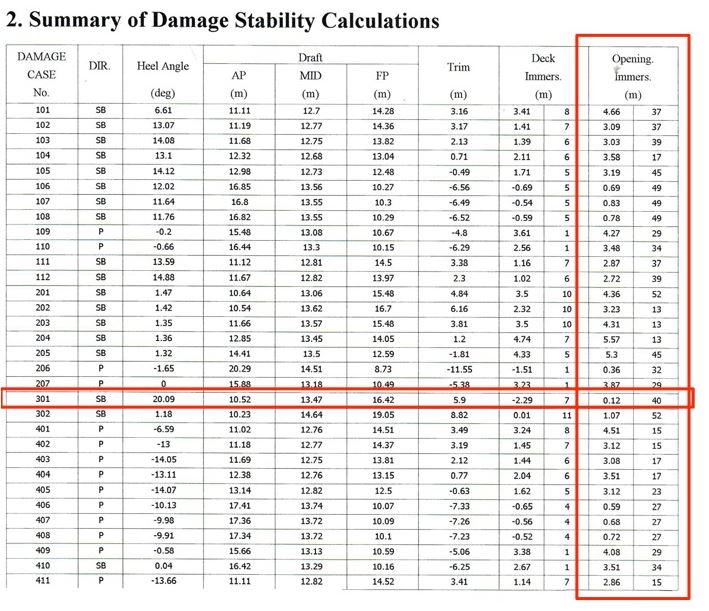
The last column (Opening immersion) gives the distance from a critical opening (the one with the least distance for that damaged case).
It also gives the identification of the opening for each case (in the above it is given as the identification number of that opening).
So looking at the above calculations can you guess the worst case of damage stability?
Did you say “Damage case 301” in which has the least distance of the critical opening (no 40) from waterline (0.12m)?
Let us scroll to the next page of the damage stability calculations for this same loading condition to see if you are right.
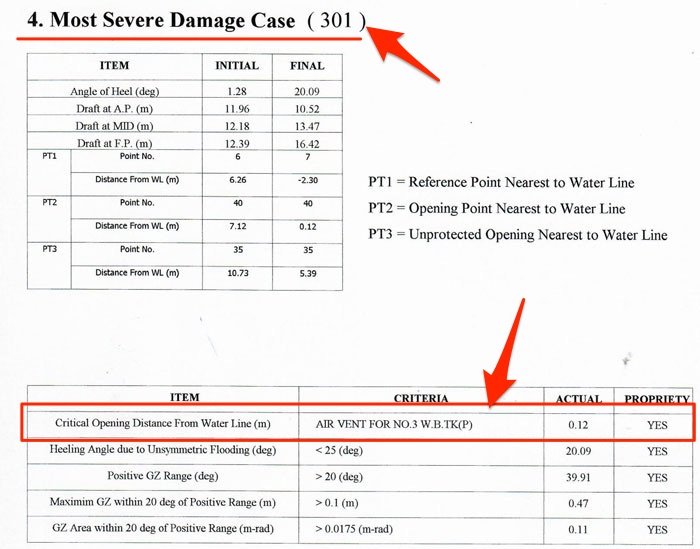
Bingo. You are absolutely right. It is damage case 301 indeed.
You see this loading computer identifies the “most severe damage case” and provides the information in one section.
But if your loading computer does not do that then you can identify the most severe damage case by looking at the distance of critical opening from the waterline.
But there is one more thing that you need to be careful about.
You need to check if the damage case with the least distance of critical opening from the waterline is not assumed to be flooded.
If it is assumed to be flooded, then the distance of this opening from the waterline would not matter and we need to look for the next most severe case.
For example, look at this damage stability calculations.
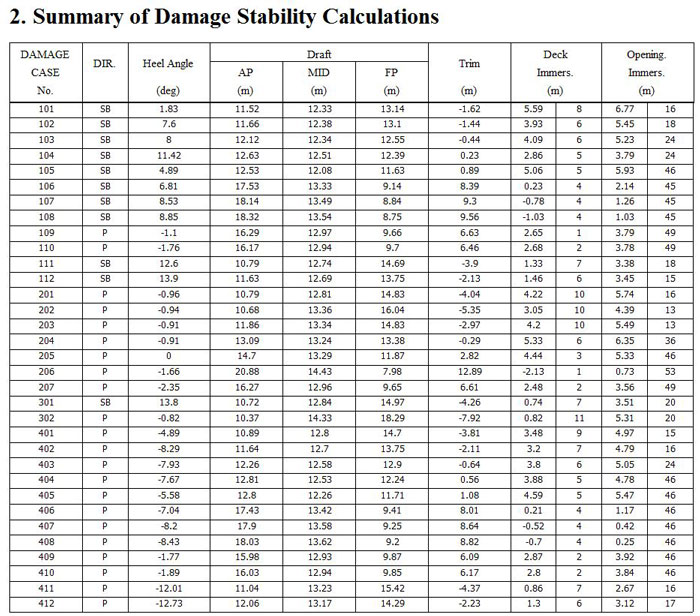
Which would be the most severe damage case in this?
You would probably say, damage case 408 with the least distance of 0.25m for opening # 46.
The opening no 46 is Air vent for E/R cofferdam (S).
And the assumed damaged compartments in damage case 408 are: 5W(P), SP(P), E/RFORDM, S/G RM, FWT(P).
The opening no 46 comes under one of these damaged compartments (E/RFORDM). So we need to neglect this while choosing the most severe damage case.
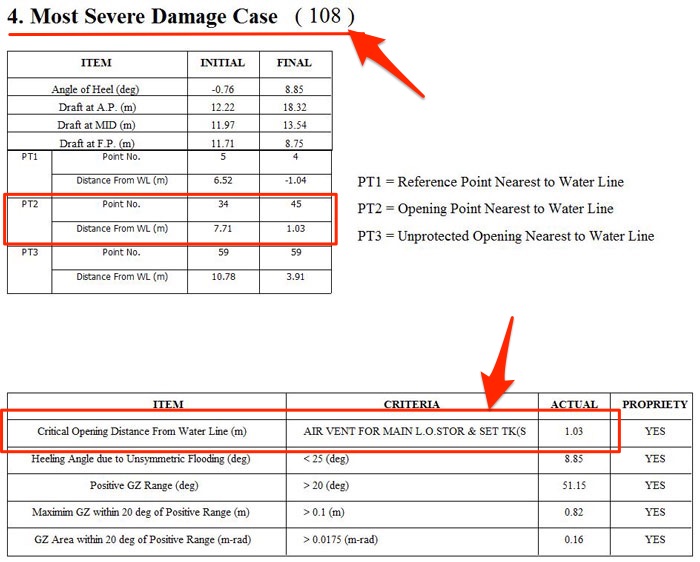
In this case, we need to look for the next most severe damage case and so on till we have a damage case where the distance is the least and the compartment of the critical opening is not already assumed as flooded.
In the above example, this would be damage case 108 as the most severe damage case.
Conclusion
It is not a statutory requirement for the masters to know about the most severe damage case.
However, SIRE requires masters to be aware of that.
Surely the factors that decide the compliance with the damage stability requirements need to be the one that decides the most severe case of damage stability too.
And these factors are
- GZ and other associated data
- angle of heel
- the distance of critical opening from the waterline
IMO has already defined the minimum required criteria for the first two factors but not for the third one.
This is the factor that decides the most severe case of damage stability.
The damage case that has the least distance of the critical opening to the waterline will be the most severe damage case.
The most severe damage case need not be the same for all loading conditions.
It can be different for different loading conditions but more often there will be one damage case that would appear as the favorite for most of the loading conditions.
How to Have a More Successful Seafaring Career?

To this date, I have been in command for 10 years 6 months and 20 days.
And with that experience, I can tell you that the job of a master is one of the most challenging job in the world.
Not only because the captain has a great number of responsibilities but also because he/she would feel isolated too often.
He/she would sometimes have to take tough decisions and no one would openly want to support that unless the issue is over when everyone would give their opinion if the decision of the master was right or wrong.
Believe me, I have seen this too many times in my sailing experience as a Master of the ship.
But in spite of all these, do you know which rank I consider the most important and difficult phase of my sailing career?
It is the time when I stepped on a vessel as a fresh 3rd Mate. Just after my cadetship.
You know why?
Because this was the phase that defined my shipping career.
This was the time that defined how good or bad 2nd mate / Chief Mate and master I would be.
This rank has become even more difficult these days compared to 20 years back.
This is because back then most of the 3rd mates like me already had enough exposure for the bridge watches as well as on deck.
This was of course done under the guidance of chief officer.
It is different these days.
Now the cadets hardly get any exposure to prepare themselves for higher rank.
This makes the fresh 3rd mate rank so more difficult these days.
And what makes it a hell lot more difficult is that there is no guidance available to them on how to go about having a successful career.
In this post, I aim to try to fill that gap.
Let us start.
Accept it: You don’t know everything
You may have cleared your competency exams in one go and your friends may have told you that you are a rockstar who know everything.
But the first step to learning is to understand that no one knows everything.
No big deal in it.
Even John Snow knows nothing.

Even if you know about something, be open to the contrary views.
This is the first step you need to take to embark on your journey of learning.
Many times even when we are absolutely sure about something turns out to be the wrong information.
You don’t even know this much
It is not uncommon for a fresh third mate to hear these words.
“You do not even know this much”. or “How did you clear your competency exams?”
My advise is, do not worry about anything when you hear these words.
Do not let your confidence down on hearing these words.
Everyone has heard this during the initial days of their career and it is fine.
Emotions
Working on a ship can have serious issues with mental health.
In fact, mental health of the seafarers is one of the hot topic these days with the industry experts.
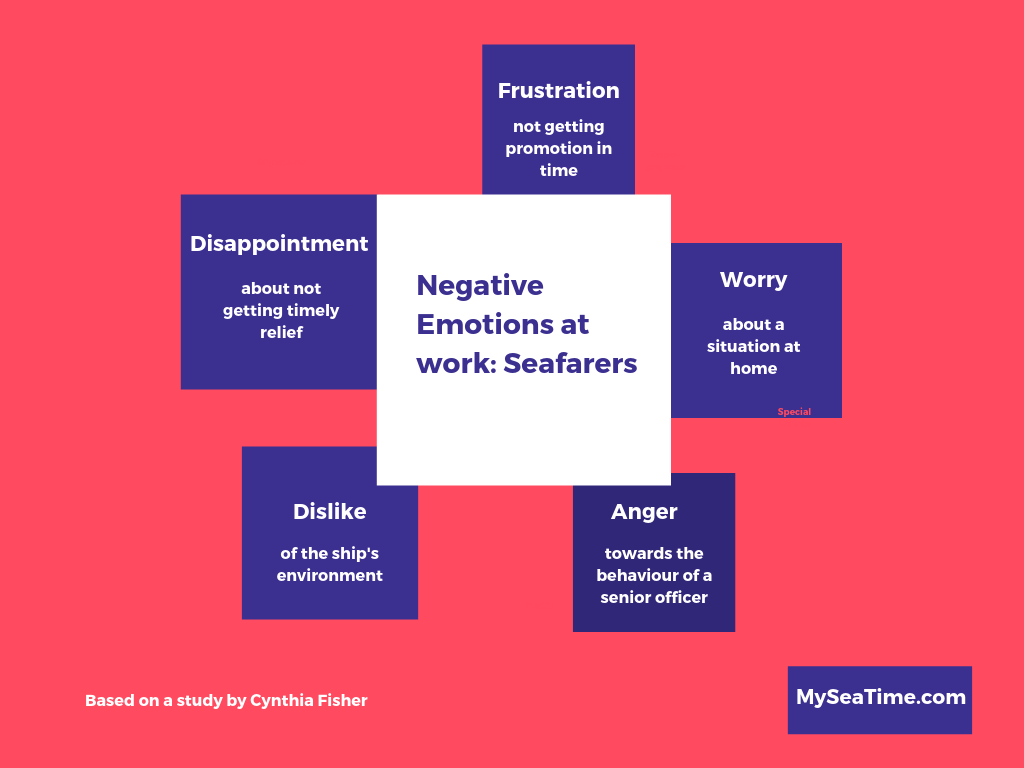
In 1997, Bond University professor of management Cynthia Fisher conducted a study called “Emotions at work: What do people feel, and how should we measure it?”
The findings relate to seafarers as well.
As per his research, most common negative emotions experienced at the workplace are
- Frustration/irritation.
- Worry/nervousness.
- Anger/aggravation.
- Dislike.
- Disappointment/unhappiness.
For seafarers, it could be
- Frustration for not getting promotion in time
- Worry about the situation at home
- Anger towards the behaviour of a senior officer
- Dislike of the ship’s environment
- Disappointment about not getting timely relief
It is so important that you start to manage these negative emotions at this early stage of your career.
You must find ways to control your anger and any dislikes towards ship or your senior officers.
By managing, I do not mean that you start tolerating everything that comes your way.
What I mean is you must not get it to affect your mental health.
In doing so, tt is important that you be respectful and at the same time be assertive.
Read this for more insight on “Managing your emotions at work“.
Find the questions
We are always looking for answers. And that is where our learning stops.
It is not about knowing the answer, it is about asking the right questions.
Questioning is the art of learning and you must learn to ask brilliant questions at the very start of your career.
The answers would flow automatically and so will your knowledge.
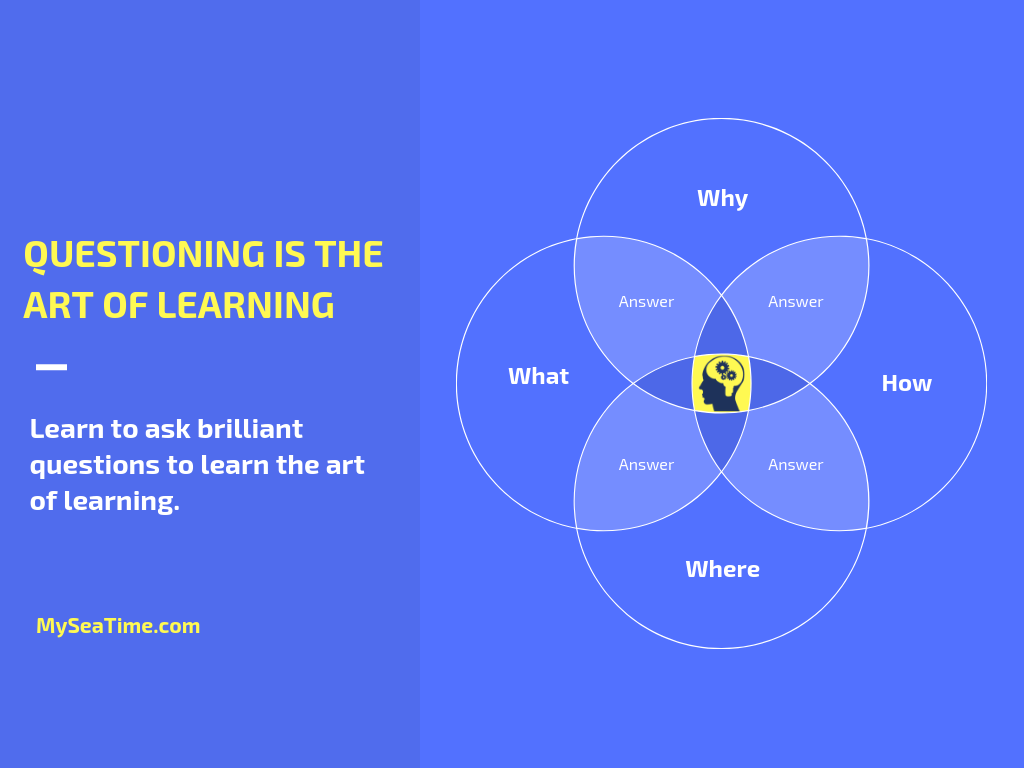
So when you are onboard, ask yourself some good questions each day.
For example, during berthing, if you are on the wheelhouse, notice the actions of master or pilot.
- If at any time you notice that they are giving subsequent hard port to hard starboard rudder movements, ask yourself why is the master doing so?
- If you notice them giving hard to port and them midship movement before giving a kick astern, ask yourself why?
When you have kept your brain open and asked yourself questions, it is only then that you will find answers easily.
In this case, it will not be difficult to find the answer that
- subsequent hard port to hard starboard movements was given to reduce the speed in short span of time. It is called rudder cycling.
- Hard to port and midship rudder movement before going astern on engines is given to check the starboard swing developed during the long astern movement for right-hand propellers.
Knowledge gained this way will stay with you for your life.
So learn to find questions during your stay onboard.
Get good sleep
It is not new to associate sleep with success.
If you usually do not get enough sleep, you will tend to be less productive, less creative and will have less control over your emotions.
In other words, without good sleep it is difficult to follow what we discussed under two section (Emotions and Find the questions) above.
Here is what good sleep does to you.
- Sleep makes you more receptive to learning
- Sleep enhances the creativity
- Sleep reduces likelihood of errors
- Sleep reduces risk of accidents
- Sleep boosts productivity and efficiency

On ships, it may not be always possible to have a good unrestricted sleep. But whenever you get time, make sure you tick this box of 7-8 hours of sleep as a first priority.
Get up early
Well, good sleep and getting up early may look to be contrasting topics but these are not.
By asking you to get up early, I am not saying to get up at 4AM.
I see this quite too often.
The officer’s watch starts at 0800 Hrs and he gets up at 07:45 and then rushes to the wheelhouse for his watch.
In this case getting up at 0700 Hrs would be getting up early.
If you start you day in a rush, missing out on few things, your entire day will be consumed doing the missed out things, which will again lead to missing out on some more things.
If you want to be successful and have a fruitful career you must try to be ahead of time.
In our example, the officer need to get up at about 0700 Hrs, be ready by 0730 Hrs.
And then give some time to reflect on day’s activities and your own plan for the day.
It would be even better to write down on what you want to achieve at the end of the day and then reflect what is actually achieved at the end of the day.
Do not leave an important task pending
If you want to succeed, you would know that you cannot leave important tasks pending.
You need to be ahead of time.
But if you have one important task pending, it will lead to a chain event.
You will always be working on to complete the pending task.
And that would put another important task in the pending list.
You are always chasing the pending task list instead of having all the tasks completed on time.
And the consequences of this are more than what we can think of.
We are always restless because we know that there are tasks that should have been complete by now but are pending.
There are more chances of making the mistakes because we know we are working on the overdue task and there are more tasks that need to be completed. This means that we are always in hurry to complete the task.
For example, if some checklists need to filed, do it before leaving the watch. Do not delay it to post lunch time.
Or as the deck log book need to be completed before leaving the wheelhouse so do it then and there. Don’t leave it for later.
Same goes for creating requisitions, maintenance of important equipment, completing port paper and so on.
Just don’t leave anything pending otherwise you will always be chasing your list of pending jobs.
There are many ways to be more productive and ensuring that you complete the tasks in time.
Here are couple of suggestions…
Follow 80-20 Rule
If you aren’t familiar with the 80/20 principle, let me give you some basic background.
The 80/20 rule, also known as the law of the vital few or the Pareto principle, is as follows:
80% of the impact comes from 20% of the causes.
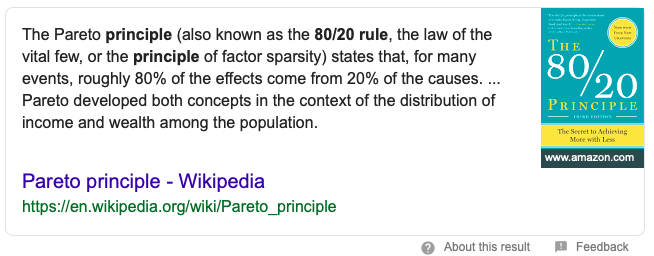
That means that a small portion of your efforts will produce a major portion of your results.
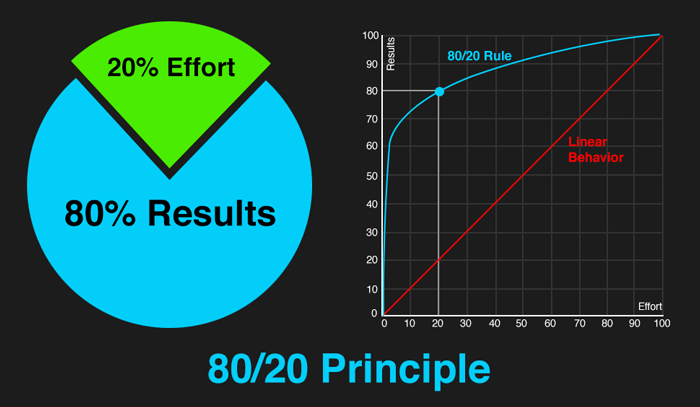
How can you use this principle to be more effective and more productive?
This means that if you have a list of jobs to do, then
- 80% of the jobs would take 20% of the time
- Remaining 20% of the jobs would take 80% of your time
So provided all jobs are of equal importance, you need to first concentrate on completing 80% of such job by using only 20% of your time and then concentrate on remaining jobs.
Another example, let us say you have a job of freeing the frozen fire isolation valves.
Your 20% of the efforts will bring 80% of the results.
That is, by just 20% of the efforts you will be able to free and grease the fire isolation valves.
If you continue and wish to have these valves open by just using one finger, this 20% improvement in the results will eat up another 80% of your time.
I do not have anything against this brilliant standard of work but possibilities are that you will end up missing the deadline for some other important job.
So instead of using your 100% of time to achieve 100% of perfection, use just 20% of your time to do the job with 80% of perfection.
80-20 rule is not universal. It won’t be applicable to each and every task. But this can be used in number of tasks to be more productive.
This is sometimes also called the rule to work smarter and not harder.
Avoid distracting yourself
Do you find yourself distracted while on a job, specially when doing some paper work.
Like in the middle of a job, you get up to get a coffee and end up spending couple of hours on a coffee break.
You can make use of pomodoro technique developed by Francesco Cirillo in the late 1980s.
In this technique you would use a timer to break down work into intervals, traditionally 25 minutes in length, separated by short breaks.
So unless the timer gives you a go, you don’t distract yourself for any other task like getting a coffee.
The technique seems too simple but it works like wonder.
There are many apps you can find that work on this principle.
Be-Focused is one of these app.
Try your hands on it.
Calling Master on Bridge
Apart from the general points addressed so far, there is this specific points that you need to keep in mind.
It is about calling the master on bridge at the right time.
If you have navigated the vessels well during your watch, you have done a good job already.
That is how important navigation is.
But as I said you won’t know everything every time.
Sometimes you will find yourself in situations when you would need the help of Master.
And you must not hesitate to call the master whenever you feel the need for him to be on the bridge.
Now I know that it is sometimes not easy to just call the master either because of odd timing or because of odd master.
But remember, if you think master’s presence is required, just do not worry about the consequences.
The consequences of not calling the master on bridge could be far worst than irritating him by calling on the bridge.
Conclusion
The sailing onboard these days demands a lot out of seafarers.
But irrespective of how demanding it is, everything still need to be done in whatever little time is available.
That is the simple rule to succeed in your career.
But if you do not work on the productivity techniques, it is practically impossible to do everything that is required to be done.
Few personal habits and rules like 80-20 can really help in doing so.
A Ship on Time Charter : Here is All a Seafarer need to know
Most of the seafarers consider shipping business as a difficult subject.
Not that it is so much difficult. But because it is not something we deal with day in day out.
We know how much we need to know to get the days to go on.
And this was perfectly Ok until a few years back.
But now, each minute matters and each hour of off-hire need explaining.
That makes it so much important for we seafarers to understand shipping business.
Today in this blog, we will discuss about time charter and what seafarers need to be aware of when the vessel is under a time charter.
Ship Charter
Shipowner buys a ship to earn a hire by letting someone (the shipper) use the space on their ship to carry cargo from one place to other.
In the ideal world, the shipper has the cargo and should directly contact a shipowner for transporting their cargo.
In the real world, it is difficult.
Why?
When we need to buy land, it is difficult to find a direct seller. Same goes for the seller for whom it is difficult to find a direct buyer.
We approach a property dealer who has a number of sellers as well as buyers for different properties.
Middleman is required quickly and easily find what we need.
In the shipping business, that middleman is called “Charterer”.
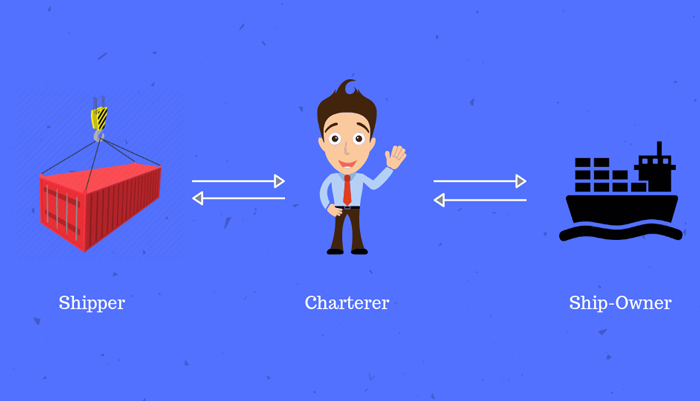
Of course, charterer does not just make the shipper meet shipowners.
In fact, they themselves hire the ship and arranges to fill the space of the ship with cargoes from one or many shippers.
And if a shipper manages to find a ship on its own then the shipper becomes the charterer too.
Different types of ship chartering
Irrespective of who the charterer is, there are different ways a ship can be hired.
- The ship can be hired for one voyage
- The ship can be hired for a particular time
- The ship can be owned for a particular time period
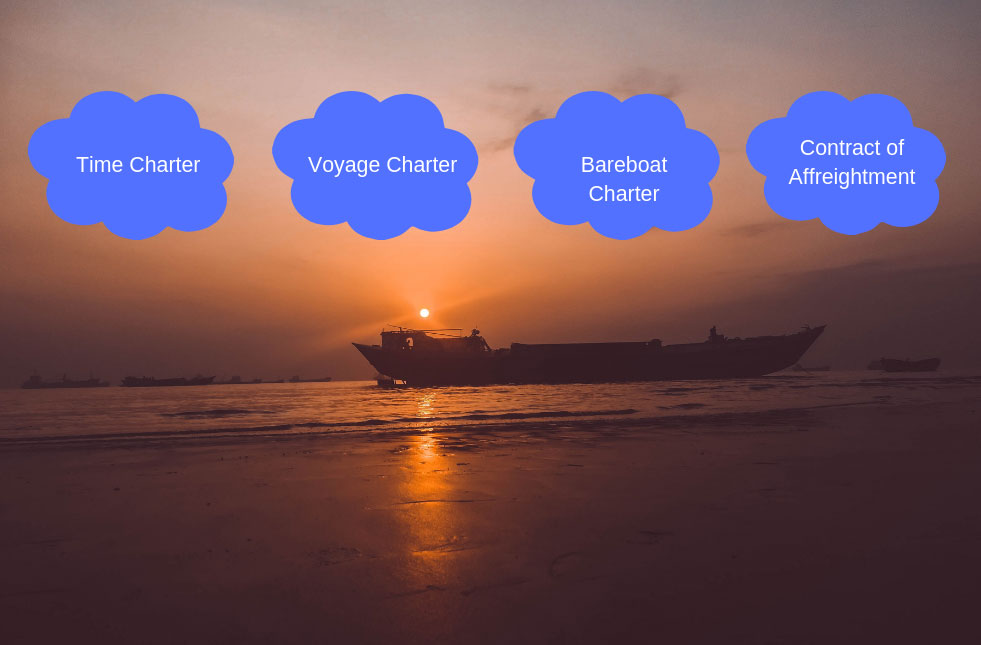
Every stakeholder has different responsibilities under each type of charter. Let us discuss each type of charter.
Time charter
Under a time charter, the charterer hires the vessel for a particular period of time.
The time could be in years, days or months.
The shipowner receives the freight on per day basis which is settled every month or every quarter.
The time charter can be compared with the hiring a cab on per hour basis.
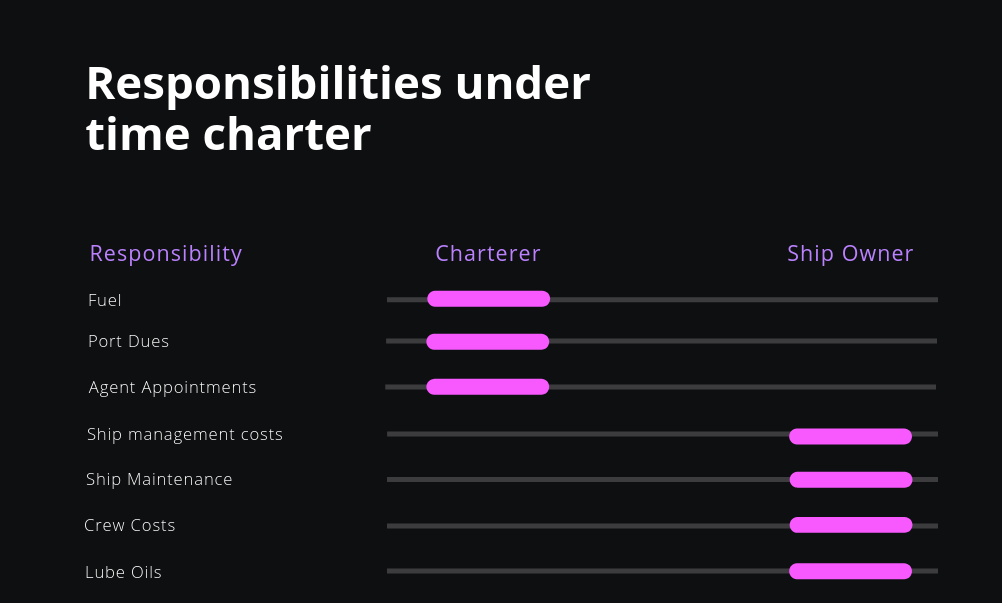
In this type of charter…
- The fuel cost is borne by the charterer
- The ship is managed by the shipowner
- The maintenance of the ship is shipowner’s responsibility
- The crew costs are paid by the shipowner
- Port dues are paid by the charterer
- Agents at ports are appointed by the charterer
Time charter party agreement
Similar to the voyage charter party agreement, for time charter the shipowner and charterer would have a time charter party agreement.
In most of the case, this time charter party agreement would be provided to the ship.
In the agreement copy provided to the ship, the figures and data like freight rate, etc may have been deleted to maintain confidentiality.
Alternatively, the ship may be provided with a different document which may be called “Charterer’s instructions to Master”.
The master must read these instructions carefully and highlight the key instructions for follow up.
At the minimum, the key instructions to look for are…
- The charter party speed as per time charter party agreement.
- Instructions for notification in case of ship-shore cargo discrepancy
- percentage of ship-shore cargo figure discrepancy allowed
- Instructions for notifications in case of an incident
Off-Hires
Under a voyage charter, the vessel has been hired for the voyage.
The charterer would not be concerned about any delay because of the vessel as it is the vessel and shipowner that would lose that time.
Consider the case of hiring an Uber.
If you have hired the cab at a pre-agreed rate, you would not be so much worried about the time the cab takes to reach the destination.
But what if you have hired the cab on per hour basis?
You do not want the cab to stop in between unnecessarily.
Same goes for the time charter.
The charterer is paying the shipowner per day basis (pro-rata) and any delay by the ship is a loss for the charterer.
This loss of time because of the ship is called “off-hire”. This is the time for which the vessel is not on hire and so the name “off-hire”.
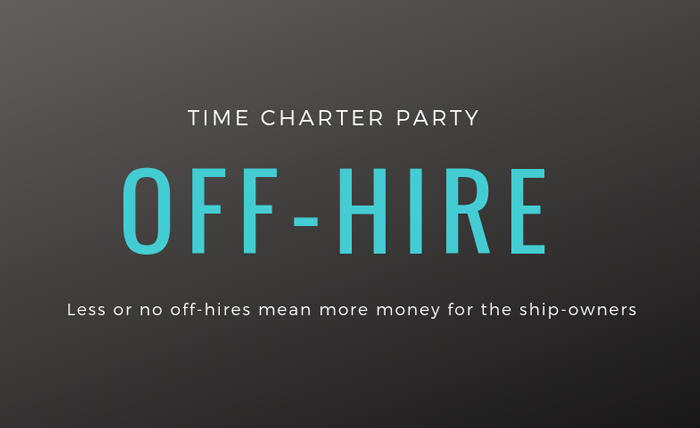
The off-hire time would be for
- any deviation from the original track (For example for a crew change, picking up stores or for some repairs, etc)
- Any stoppages at sea (For example for machinery breakdown etc)
- Cargo tanks failed by the cargo surveyor and declared not fit for loading
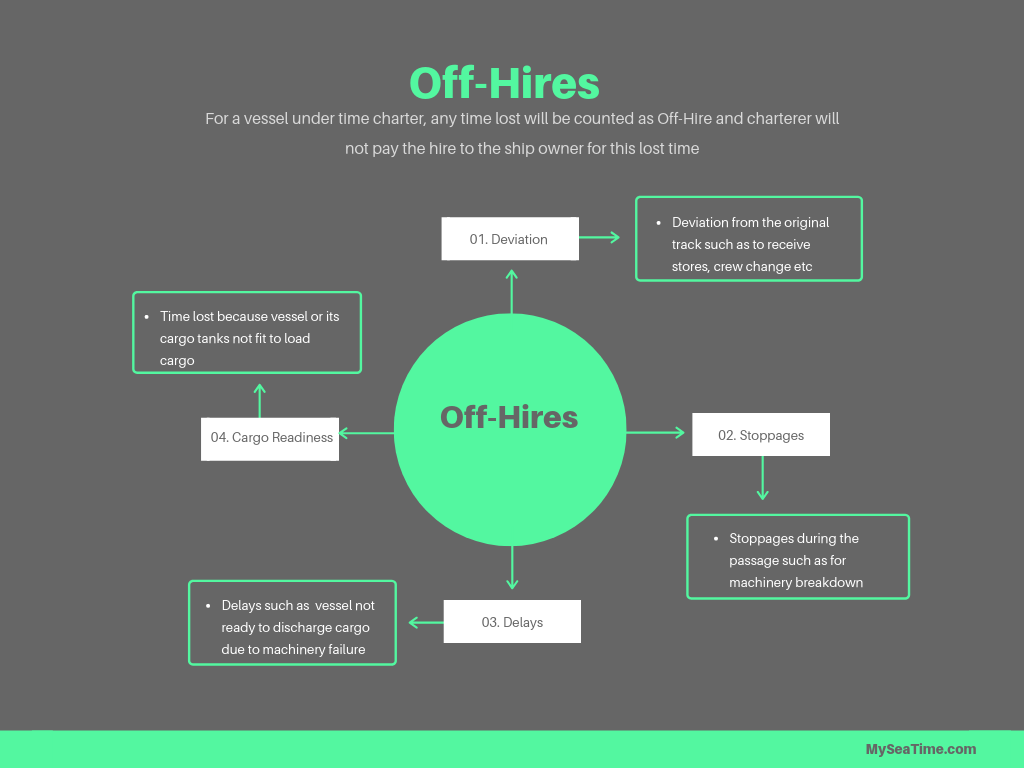
Our responsibility as seafarers is to keep the off-hires to as close as possible to the zero hours.
For any off-hire, the vessel needs to send the off-hire report which lists the total off-hire time and fuel consumed during this off-hire time.
Sometimes time charter party agreement may allow certain hours of off-hour per instance which will not be charged to the shipowner.
For example, it could be something like this in a time charter party agreement…
If the owners manage to keep the off-hire time for one instance to less than 3 hours, this would not count as off-hire and no reimbursement need to be paid to the charterers by the shipowner…
For example, if the cargo tanks were failed by the cargo surveyor and after corrective action by the ship staff if the tanks were passed within 3 hours then there would not be any off-hire.
In any case, the master needs to create an off-hire report for all the off-hires and send it to the shipowner/ship manager for approval.
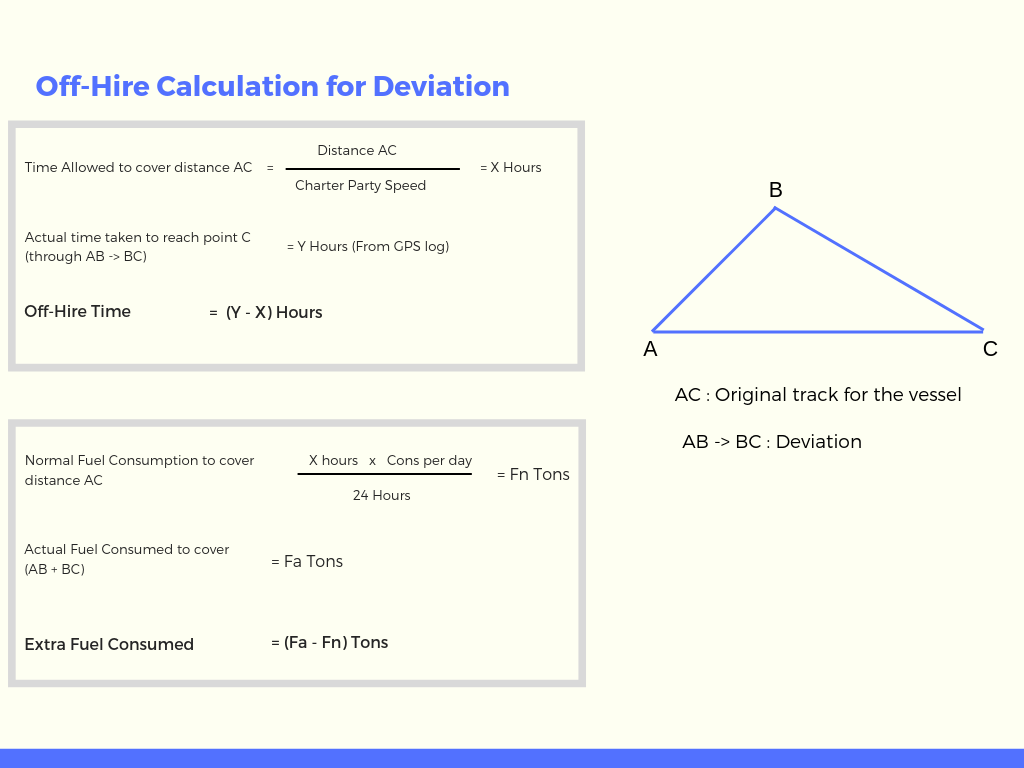
Ship managers would then forward (or ask the master o forward) the off-hire report to the charterers.
Speed of the ship
If you hire a cab on per hour basis, you would not expect it to move slowly.
If it does, you would end up paying more money as it would take more time to reach the destination.
Similarly, under time charter, the charterer would want the ship to run at speed declared by the shipowner or agreed in the charter party agreement.
It is the master’s responsibility to ensure that the ship always maintains that speed.
But what if the vessel is experiencing rough weather and master is not able to maintain the charter party speed?
The time charter party also have clauses for the weather conditions.
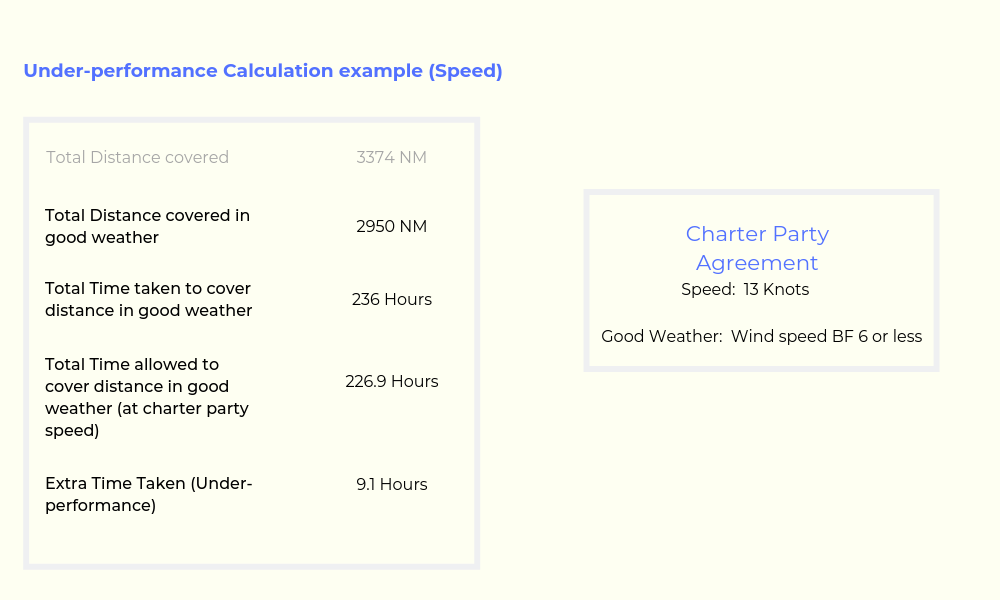
So say, the vessel is required to maintain 13 knots of speed when the wind speed is less than BF 6.
If the wind force is 6 or more, the speed for that period will not count as under-performance of the ship.
This makes it so much important to note down the weather conditions correctly in the deck log book as well as in the noon report.
At the end of an agreed period (each voyage, quarter, half yearly or yearly as agreed in charter party agreement) the performance of the vessel with respect to speed will be analyzed.
Fuel
Under a time charter, the fuel costs are covered and paid by the charterer.
The fuel supply is arranged by the charterer.
When the ship is delivered to the charter, charterer/shipowner may carry out fuel oil survey to get the actual fuel oil onboard at the time of delivery of the vessel to the charterer.
This would be the fuel that shipowner has delivered to the charterers at the time of delivery of the ship.
When the charterer hands over the vessel back to the shipowner, the bunker survey is again carried out.
This will the fuel handed over by the charterer back to the shipowner.
So let us say that
- Bunkers at the time of delivery were HFO: 400MT and DO: 100 MT
- Bunkers at the time of re-delivery were HFO: 250MT and DO: 50 MT
In this case, charterer needs to pay the shipowner for 150MT of HO and 50MT of DO.
It would be another way around if the bunkers at the time of redelivery are more than the bunker that was handed over to the charterers at the time of vessel delivery.
Agents at load port and discharge port
When the vessel is under time charter, the agent at load port and discharge port would be appointed by the charterers.
Shipowner or manager would have no role and relation with the agents.
It is important for the master and ship staff to be aware of this.
Usually, the agents are there to help ship staff but if the vessel is on time charter, we need to be more cautious while handling with an agent.
In a time charter, the loyalty of the agents lie with the charterer and not with the ship staff or shipowners.
Masters must be aware that as the agent is being paid by the charterer and not the shipowner, they may not go out of their way to help the vessel.
This is particularly important in matters that lie under the responsibility of the ship staff, shipowners or managers.
For example, if the ship is detained by the PSC for some reasons, the agent may not be that enthusiastic to clear the vessel at the earliest as in this case the vessel will be off-hired and the agent’s employer (charterer) would not be loosing on anything.
This may not be the case with some professional agencies but nevertheless, masters need to be aware of this.
Cargo under-performance
Under the time charter, the charterer may claim for under-performance of the vessel and seek compensation from the shipowner for loss in time.
The under-performance could be
- Delays in starting the cargo operation
- Loading of the cargo at less loading rate
- Discharging of the cargo at less discharge rate
- Stoppages during cargo operations from the ship staff
If the under-performance claim is justified and valid, then there is not much we can do.
But there would be occasions when it would actually be the delay from the shore and which is being claimed to be ship delay.
That makes it important to accurately issue these two documents
- Statement of facts
- Letter of protest for any delays
Apart from that accurately recording all the timings in the port log is important to support SOF and letter of protest.
For tankers, if any restrictions are put by the loading master on the vessel’s capability to load or discharge, a protest must be issued on this.
The restriction could be
- to maintain manifold pressure lesser than the vessel is capable to maintain
- to discharge (or load) at a rate lesser than vessel can load
- shore provided a number of hoses lesser than vessel can connect
The letter of protest would help the ship staff and shipowner to prove that vessel under-performed because of the shore side restrictions.
The time charter agreement (or the instructions to master) provided onboard may have the minimum loading or discharge rate vessel need to maintain.
This could be something like
Owners warrants that vessel can discharge at a rate of 500 m3/Hr and maintain 7 bars at the manifold in all conditions…
While the vessel needs to make sure that they comply with this but they must not over-rely on these instructions.
For example, at a discharge port vessel achieved discharge rate of 800 m3/Hr.
This does not mean that there is no need to issue a letter of protest for any restrictions from the shore side.
Unclear, unreasonable and unsafe instructions
While on time charter, the charterer may ask the master to perform some tasks which may be unsafe or is not as per the industry guidelines.
I will list here two of such instructions that I personally came across.
- Charterers asked to load a heated cargo adjacent to a cargo which is heat sensitive.
- Charterers asked to keep the original bill of lading on board during the voyage from load port to discharge port
You may come across other such requests. The master needs to decline these requests.
If at all required, Master need to oblige to the requests only when
- The charterer has provided a “letter of indemnity (LOI)” to the ship owners or managers
- Instructions have been received from the shipowner or manager to oblige the request
- It is safe to do so
Conclusion
From a commercial point of view, it is Master and ship staff’s moral responsibility to ensure that shipowner profits from owning and running the ships.
But there are no hard and fast written rules that hold good in all situations.
This is particularly the case when a ship is chartered in different ways.
It is important that we understand our responsibilities under each charter party.
And it is important that we understand where the loyalties of each party that we are interacting with lies.
Here is What a brilliant Passage plan on ECDIS Looks Like
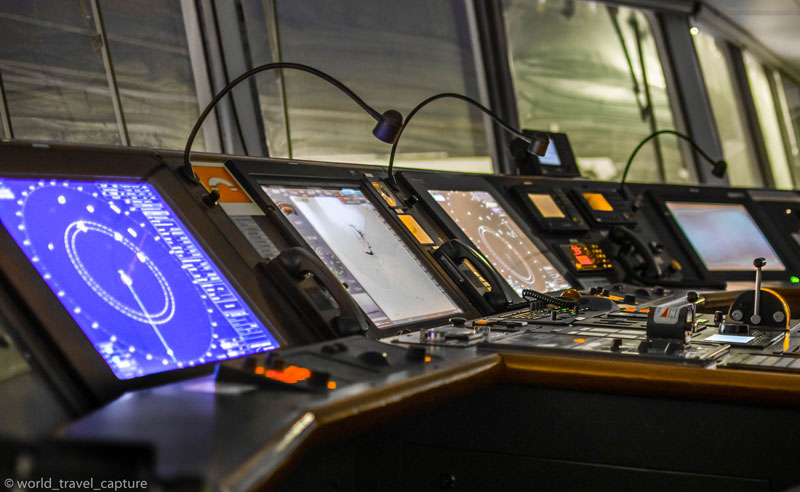
We have come a long way since ECDIS was brought into our lives.
In the initial days we were just struggling to keep the ENCs updated on ECDIS.
But that is the thing of the past. Most of us know this drill at the back of hands now.
And I have covered quite a few of articles on updating and keeping the ENCs up to date.
Even during the third party inspections, the inspectors are now focussing on the ECDIS in detail.
As even they consider that the period for amateur questions on the ECDIS is over.
One of the area that now require detailing is the passage planning on ECDIS.
Well, actually there is nothing different in the passage planning on ECDIS.
More or less it is same as what we used to do on paper charts. But still it is so much different.
In this blog we will discuss the 7 elements which once plotted would make the passage plan on ECDIS stand out.
Let us start.
1. Route
The first element that you all may have guessed is the route.
And when it comes to choosing the route, there is nothing different from what we do even when were using paper charts.
We need to find the information from all the publications available.
Here is an article that I had written sometime back on using the publications to find the best route to follow.
And once we have all the information, we need to use that to decide the route.
The route that we decide must follow all the company requirements and must be in accordance with the industry guidelines.
Let us see how to go about creating the route on ECDIS (JRC ECDIS).
On the top menu, go to Route -> Route Planning -> Graphical editor.
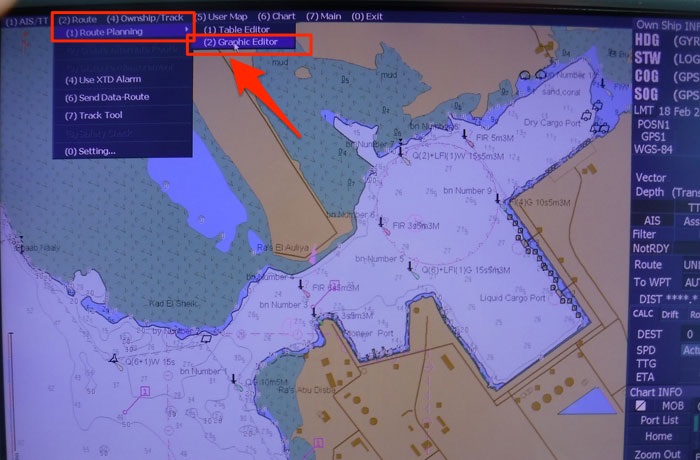
Then it is just like drawing a route on the paper chart. Just take the cursor on the starting point and keep on clicking wherever you wish to create a waypoint.
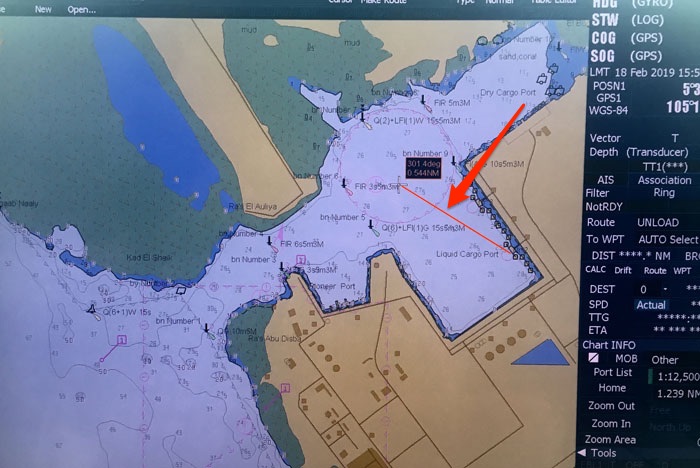
When doing that, it would be easier to zoom out and choose a little smaller scale to get the idea of where we need to head to.
And then you can keep on zooming in and out as and when required while creating the route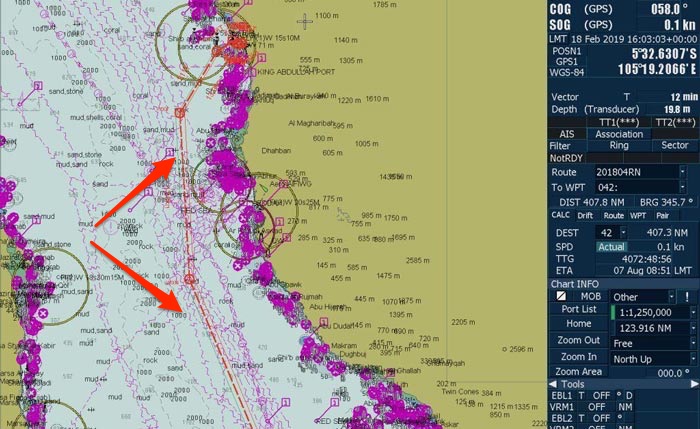
Once you have created the complete route, you can save the route.
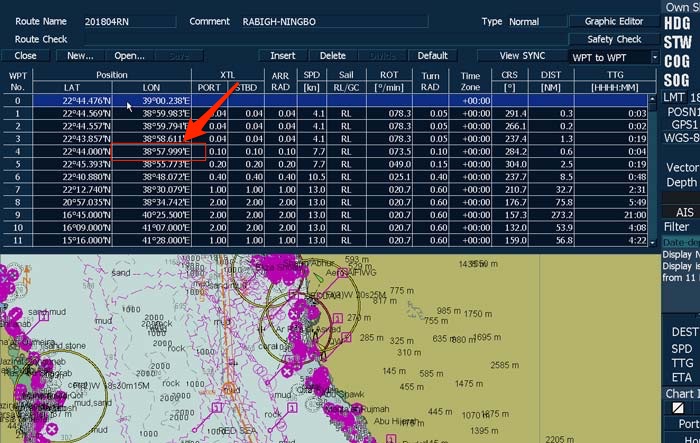
The waypoints created by the graphical editor would most likely be upto 3 decimal places. For ease of reference, you may want to change these waypoints to upto one decimal place.
For that you can go to Route -> Route planning – > table editor and open the recently saved route.
From the table, you can fine-tune the waypoints. For example, you can change the longitude 38 Deg 57.999′ to 39 Degrees.
2. Route check.
We now need to make sure that the route that we have drawn is not passing through any dangers.
But before we do that, we need to set the safety settings on ECDIS according to our draft for the next voyage.
I have written a blog on ECDIS safety settings in detail and check that out about more information on ECDIS safety settings.
Now to check the route, each ECDIS has a function called “Route check” or “Safety Check”.
Go to the Route -> Route Planning -> Table editor and open the route that you have created for the present voyage.
In the editor, enter the value of the cross track error that you wish to have or that your company or master allows.
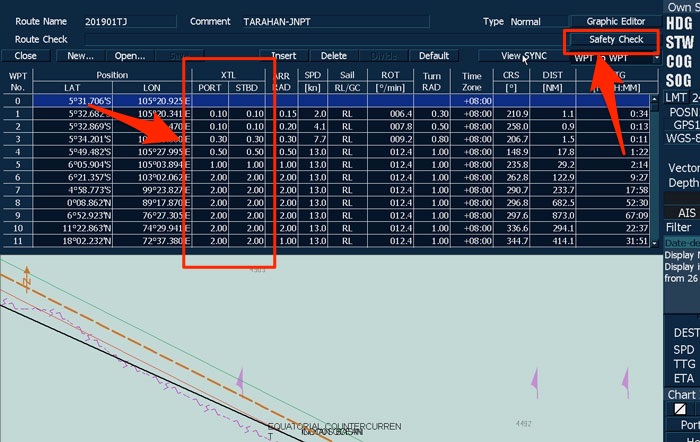
The route check function will check if the route (along with the cross track distance) is not passing through any dangers to navigation.
When we have entered the cross track distances for each leg, click on the “Safety Check”.
The ECDIS will check the route and display all the errors that user need to check physically for.
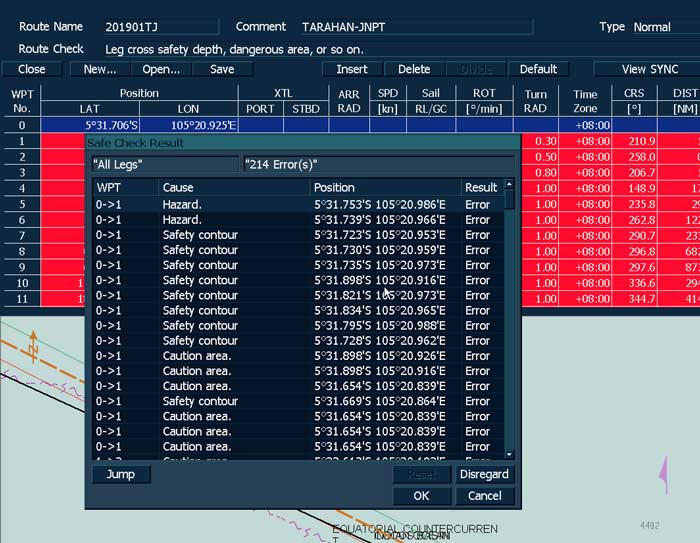
We need to check these error by going to that area of the passage plan on ECDIS.
To do that just select the error and click on Jump.
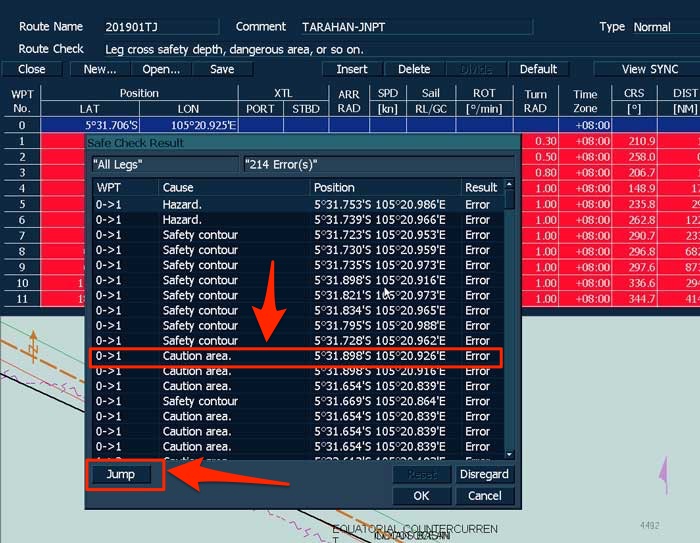
This will take the ECDIS to the area of the passage plan where this error is detected.
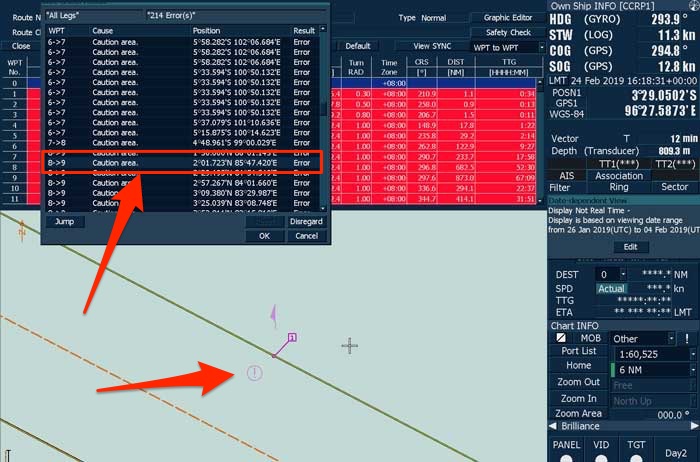
For example, if the error is about a caution area, check the detail of the caution area.
This can be done by right-clicking on the ENC and choosing “S-57/C-Map/ARCS Information” and then clicking on the “caution area” symbol.
After assessing the information, Modify the route if required. Otherwise, check the next error.
After checking each error, click on that error and click “disregard”.
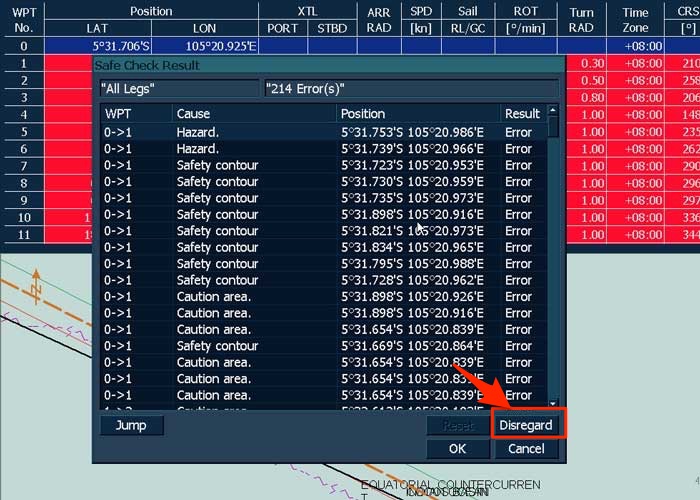
After you have checked all errors, click on “Ok” and save the route.
You have now completed the route check.
3. Parallel Indexing
Parallel index distances must be marked from the fixed objects on the route.
In the open sea, it is wise to choose any fixed object up to a range of 24 miles or less for marking the parallel index lines.
As your radar will be in the range of less than 12 miles in coastal waters, you can choose to mark parallel index lines from any fixed objects in that range.
And as we all know, the parallel indexing must not be done with floating objects like buoys.
To mark the parallel index lines we use “user map” feature of the ECDIS.
Go to User map -> User map editor.
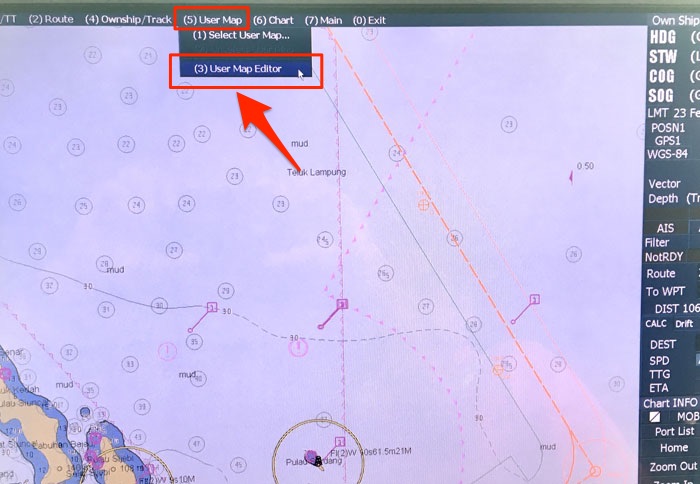
Click on New -> Simple Line and then take the cursor to the point (landmark) from where you want to draw the Parallel index line.
Draw the first line parallel to the course line and then 90 degrees to that to join it to the course line.
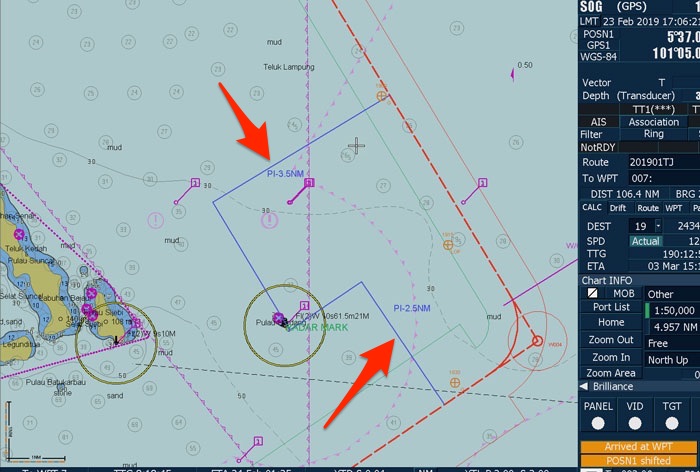
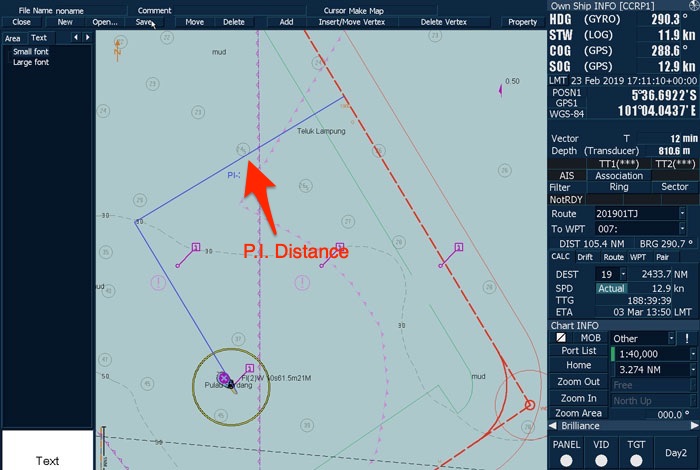
You can then click on the “property” on the right corner and change the line color and thickness etc.
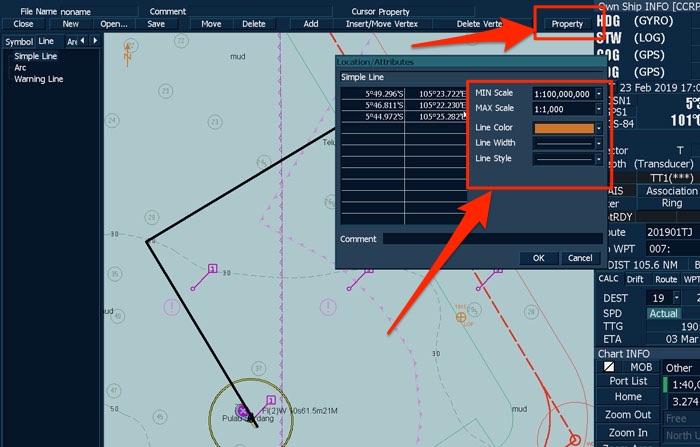
It is better to have the color of the PI-line something other than the course line so that course line can easily be recognized during the voyage by the navigators.
Now we need to write the Parallel Index distance for the PI that we have drawn just now.
Click on New -> Small text. Click at the location near to the PI line where you want the text to appear and then write the text such as “P.I. 3.2 NM.
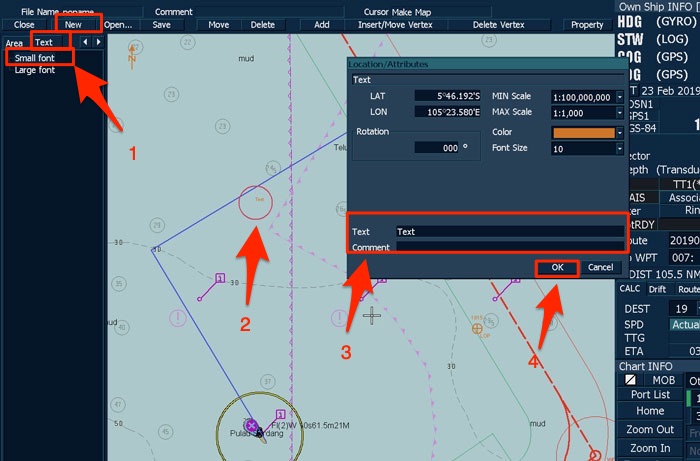
Of course, we need to measure this distance first and write an accurate distance.
You can then click on “OK” and then “Save” on the top menu.
Just enter the name that you want to give to this user map (may be the voyage number) and then click on “Save” to save the user map.
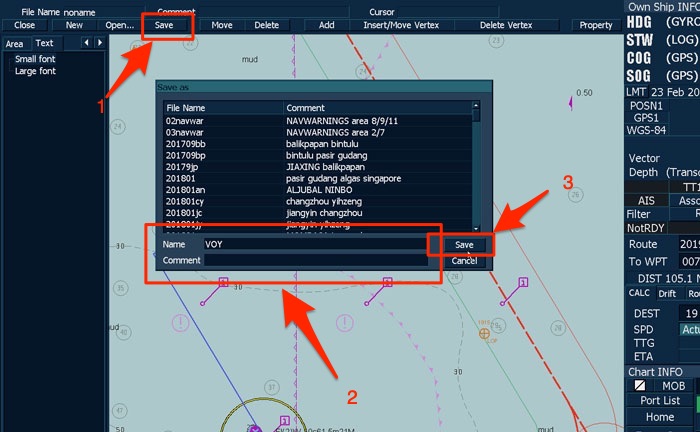
This same user map will be edited for all other markings that you need to plot on the ENCs.
Now finish plotting all the parallel indexing lines and distances from all the radar conspicuous fixed objects on the voyage.
4. NO GO Areas
We are required to mark the no-go areas along our route.
These are the areas that are the danger to navigation and we must not navigate into.
But let us say there is a wreck (or shallow waters) about 50NM from our planned route. Do we need to mark this as “No-Go area”?
On a paper chart, the answer to this question was simple.
And the answer was, Yes, we do need to mark it as no go area if it is on voyage chart.
But the ENCs on ECDIS are seamless and the same logic does not apply on ECDIS.
So what is the maximum distance that we need to mark the no-go area upto?
Well, ideally this distance should be provided in the company’s navigation manual.
Alas, most certainly you will not find it there.
So, in the case, a distance can be decided by the master and the same communicated to the navigating officers.
If we have decided the distance of 50NM, we need to mark the No-Go areas in the range of 50NM from our route.
The no go areas must not be marked excessively.
What I commonly see that we sometimes mark the entire shallow water contour as the no go area.
This is wrong because
- It is not that we cannot cross the shallow contour. We can. The only thing we cannot do is run over the safety depth. And thus the shallow contour is not a no go area.
- Even if we consider this as a no go area, the distinction of this area is already visible with a different color. Why clutter the ENC further?
The marking for no go area needs to be done for something that the navigator could miss.
Something like an isolated danger, wreck, depth area or an area like with oil rigs that vessel needs to avoid.
We need to identify all such areas and mark these as “No-Go Areas”.
To mark the no-go area, go to User Map -> User map editor and open the user map that you have created for the present voyage.
By now, you should be able to create lines, shapes and add text in the user map.
To mark the user map you need to use these lines and shapes to mark the area as a No-Go area.
Use your artistic skills to decide which shape or line you need to use for marking of No-Go area.
Once marked, go to the property and change the line color, thickness etc.
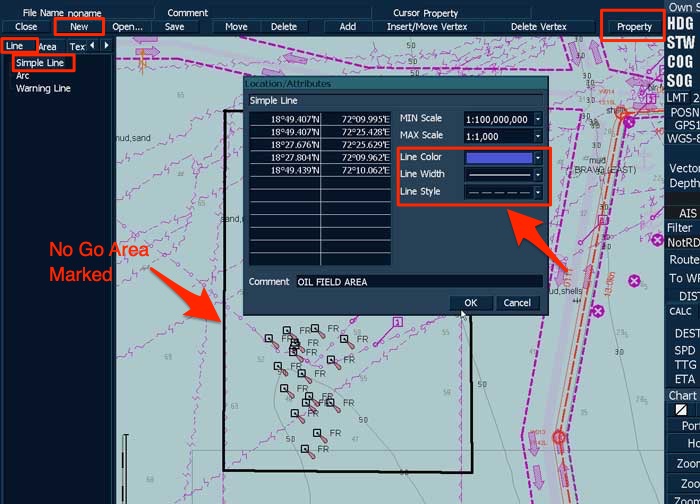
Again use the color as something other than the course line color and thickness slightly lesser than the course line.
Finally, write the text as a No-Go area around the marked area.
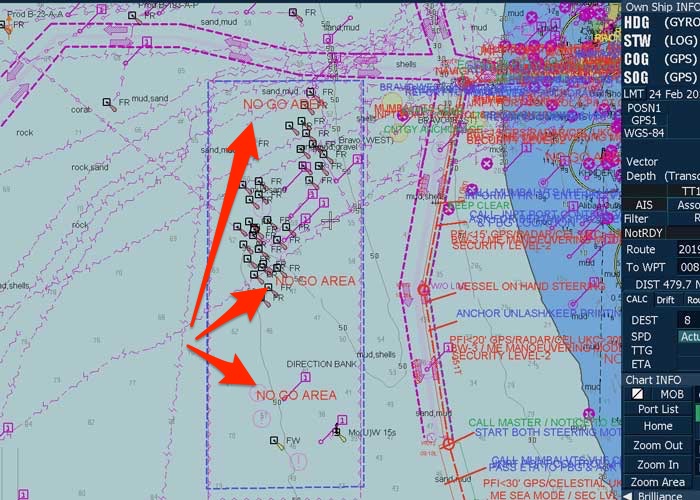
5. Wheel over position
Whenever there is a large alteration of the course, we need to mark a wheel over position.
This is the position on our initial course at which we need to start altering the course at a pre-planned rate of turn to arrive at the next desired course without running into the danger.
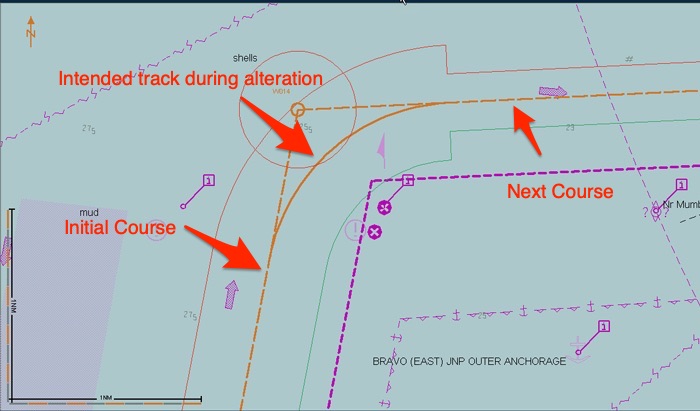
Marking of wheel over position is part of the passage planning.
But how to mark this on ECDIS?
The wheel over position depends upon the speed of the vessel and rate of turn during alteration of course.
As the turning of the ship is in form of an arc of a circle, there is another element that is involved: Radius of turn.
There is a relation between these three terms.
ROT = Speed of the ship/Radius of turn
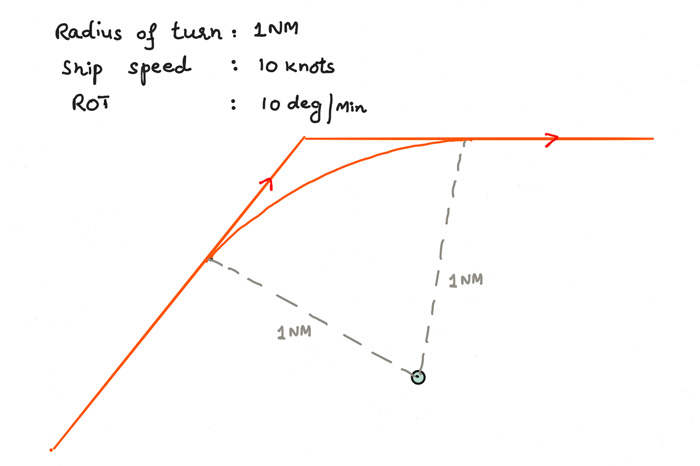
But what the officer on watch need to know when altering the course?
They need to know at what position he should start altering the course and with what rate of turn should they alter the course.
We must keep in mind that this arc is a kind of our course during the course alteration process.
The arc would remain the same if the radius of turn would remain the same and we do not change that.
For this reason, we need to define the value for the radius of turn and keep this same once planned.
Usually, we keep the radius of turn of 1NM as constant.
Now with this, ROT becomes equal to the ship speed.
While passage planning on ECDIS, we need to define the value of the radius of turn and ship’s speed at each leg.
To do that, go to the route – > Route planning -> table editor and open the route you created for the voyage.
Under each waypoint, enter the value of “Turn Rad” and “speed”.
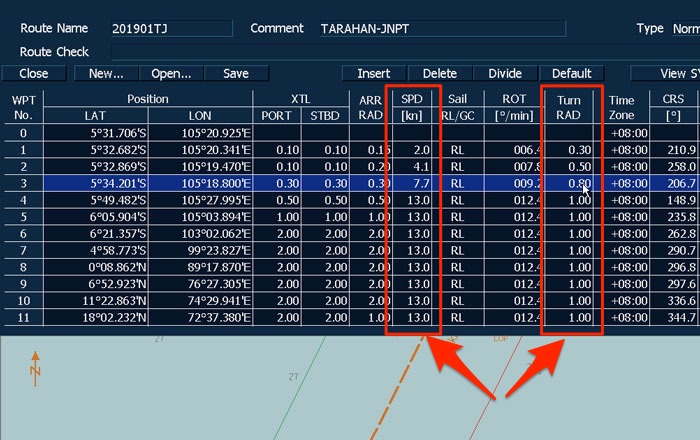
This would create the arc for the alteration of course for each leg in the route.
But that is not enough. There is another element that we need to address.
Once we put the rudder on one side to turn the vessel, the vessel will take some time to start turning. We need to allow this while marking of the wheel over position.
This information is provided in the maneuvering booklet and is given in terms of “distance moved as the length of the ship before vessel start turning”.
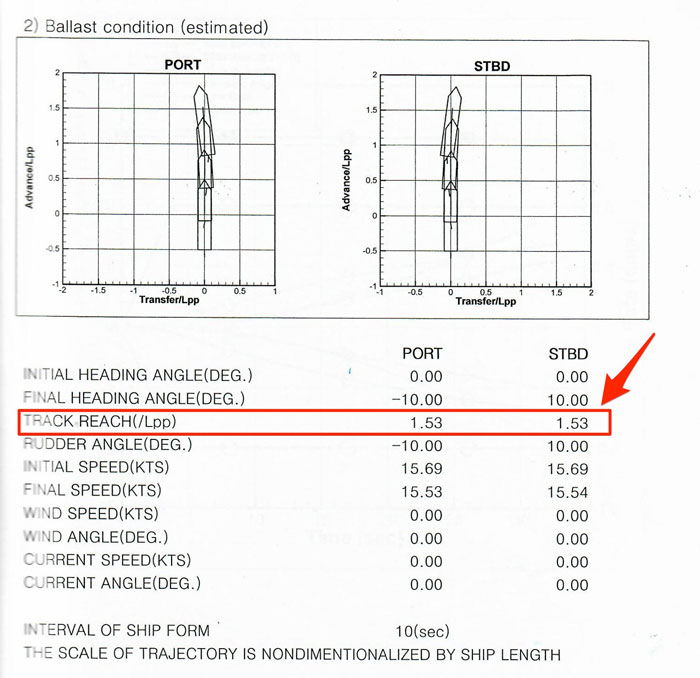
It is generally between one to two lengths of the ship.
The wheel over position needs to be marked at a distance by that much from the start of the course alteration arc.
It may not be possible to measure that small distance but just make sure it is justifiable.
And to mark that we need to edit the same user chart that we have created for the voyage. We have already discussed about editing the user chart.
Here is how marking of the wheel over line would look like.
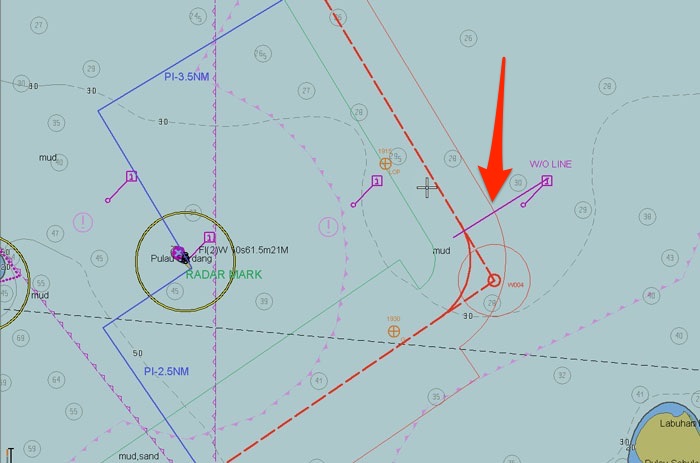
Wheel over range and bearing
If there is a fixed object near the wheel over position from which radar bearing/range or visual bearing can be taken, we need to define the wheel over position with respect to bearing/range from this object.
Again, the marking of this line will be by editing the same user chart.
Then we need to draw a line from the fixed object to the wheel over position and measure the bearing and distance from wheel over position to this fixed object.
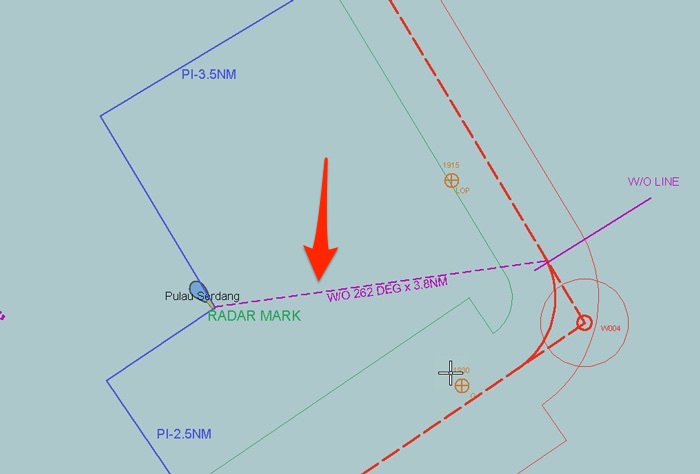
We can then edit the user chart further to write the text with information about bearing and distance.
6. Abort point and point of no return
I have written in length about “abort point and point of no return” in a different blog.
Read this blog if you wish to understand about the marking of abort point and point of no return.
Marking of abort point on ECDIS is not different than marking on paper chart except here again we will use the user chart option for marking instead of pencil.
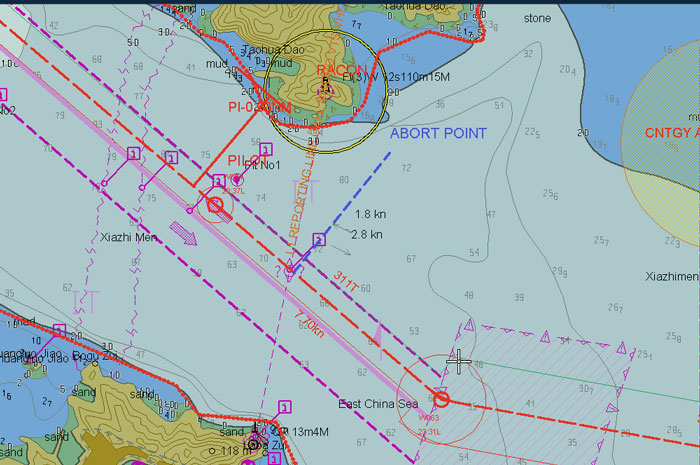
7. Position plotting interval
I have in written in length about “position fixing and position plotting interval” too.
Here is the link to that blog.
“Position fixing interval” is the maximum interval between two position fixes. So if in a particular section of the passage, we have agreed to the PFI of 01 hours, we must plot the ship’s position at least every hour.
During the passage planning, we need to decide the position plotting interval and methods.
This information needs to be provided at each leg of the route.
On ECDIS we just need to edit the same user chart to include the text about position plotting interval and methods at each leg.
8. Other information
Then there is other information that we need to write on the ECDIS. These include
- Watch levels
- Contingency anchorages
- Security levels and hardening measures
- Reporting requirements
- Calling the master
- The point at which notice to be given to Engine room
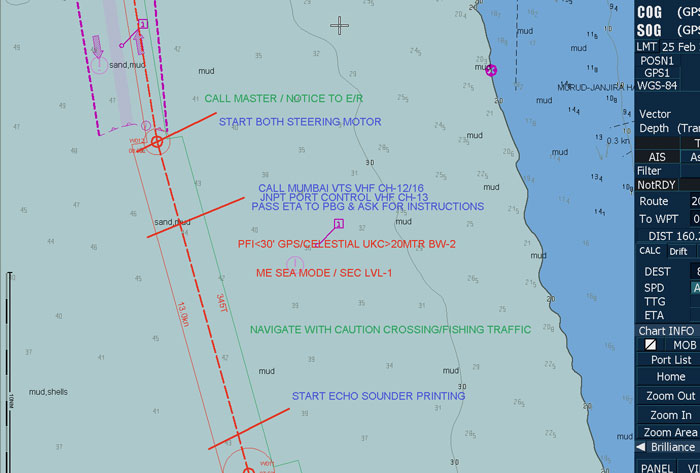
Even though all this information are to be in text form but I will expand on these points in future blogs.
Conclusion
We have mastered the art of Passage planning on paper charts.
After all we had been doing this for decades.
However passage planning on ECDIS is comparatively a new thing and is evolving.
Conceptually this is no different from the passage planning on paper chart but we must understand the ECDIS specific elements to plan the passage on ECDIS.
A Layman’s Guide to Laytime, Charter party Agreement and Voyage Charter
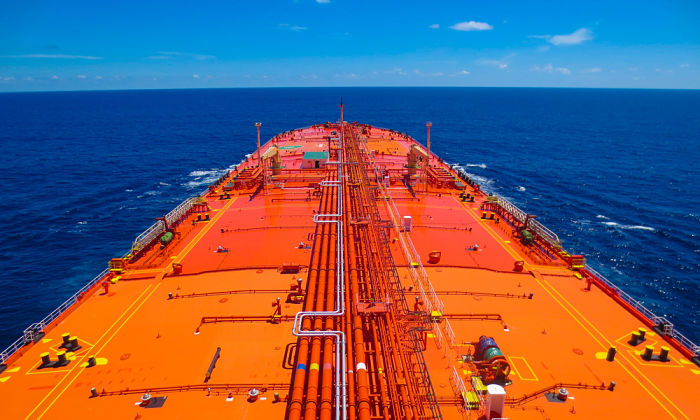
The word “Charterer” is probably as old as the word “Ship” itself.
Do you keep hearing this word so regularly?
Well, who doesn’t?
From seafarer’s point of view, it is so much important to understand these terms.
Why?
Join now to access this article and much more.
Admin has placed this article behind a paywall, making it accessible only with a paid membership, which offers numerous perks:
- Contribute to creating a platform for reading and writing without ads.
- Enjoy all content here, including exclusive articles for members.
- Gain access to all exclusive articles for members.
So the shipper’s broker is the person or company that help shipper find a charterer for a fees called brokerage.
And charterer’s broker is the person that help charterer find a ship to hire.
The charterer may even have brokers for different purpose. For example charterer may have a broker to find a cargo for the ship they want to hire and they may have another broker to find a ship for the cargo they have in hand.
Broker or no broker, the charterer and shipowner would agree on the terms and conditions which would form “Charter party agreement“.
Charter party agreement is a detailed document which, apart from various clauses, has informations such as
- When and where the vessel is required to be
- the freight agreed
- If the broker was used, who need to pay the brokerage fee and how much
Even though shipowners is primarily dealing with the charterer, it does not mean that the shipowner would have no relation with the shipper.
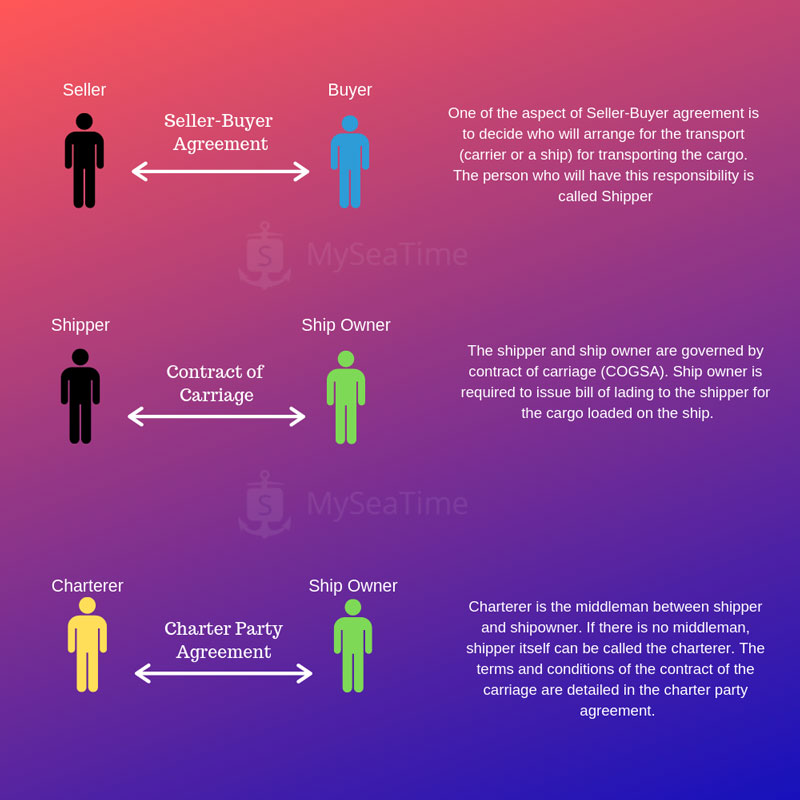
Shipper and shipowner are connected by the “carriage of cargo at sea act”, also called COGSA.
And one of the main point of it is that shipowner is required to issue bill of lading to the shipper for the cargo loaded onboard.
And with that each of the shipper have entered into an agreement with the ship owner which is called “Contract of carriage”.
While the “charter party agreement” is a formal agreement, the contract of carriage is governed by various laws and regulations such as Hague-Visby rule.
Charter party agreement supplement the contract of carriage.
Usually you would find a mention of the charter party agreement in the bill of lading. The wording in the bill of lading could be something like this.
This shipment is carried pursuant to charter party agreement between “Charterer’s name” and “Carrier’s name” and all the terms, clauses, conditions, liberties and exceptions whatsoever contained therein are incorporated into this bill of lading.
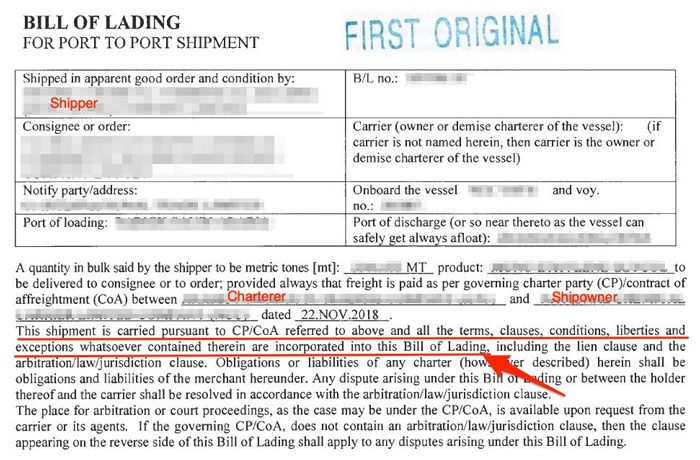
But do the shipowners and charterers do this exercise of negotiating the format of the charter party agreement each time they do the business together.
Absolutely not. Hell, it would take a lot of time.
Instead they use pre-defined forms. These forms are developed by Independent International stakeholders such as BIMCO and INTERTANKO and are widely used in the shipping business.
There are different forms for different trades.
For example there is form SHELLVOY 6 for use in tanker trade and then there is form AMWELSH 93 for coal dry cargo chartering.
Also if a charterer and ship owner have done the business before, they use the same charter party agreement for the future shipments too.
For this reason, many a times even for a voyage in 2019, you may find the mention of charter party dated in 2016 or even before. In the bill of lading issued even in 2019 , it may read something like,
The shipment is carried pursuant to charter party agreement between “Charterer’s name” and “Carrier’s name” dated 01 January 2016…..
Now that we understand the concept of chartering, let us understand the different ways in which the ships can be chartered.
Voyage Charter, Time charter, Demise charter
There are different ways in which a charterer can charter (Hire) the vessel.
Charterer can charter the vessel for one voyage (Voyage charter), for a particular time period (time charter) or they can hire and run the vessel as if they are the owner of the vessel (Demise or bareboat charter).
In each type of charter, charterers and shipowners have different area of responsibilities.
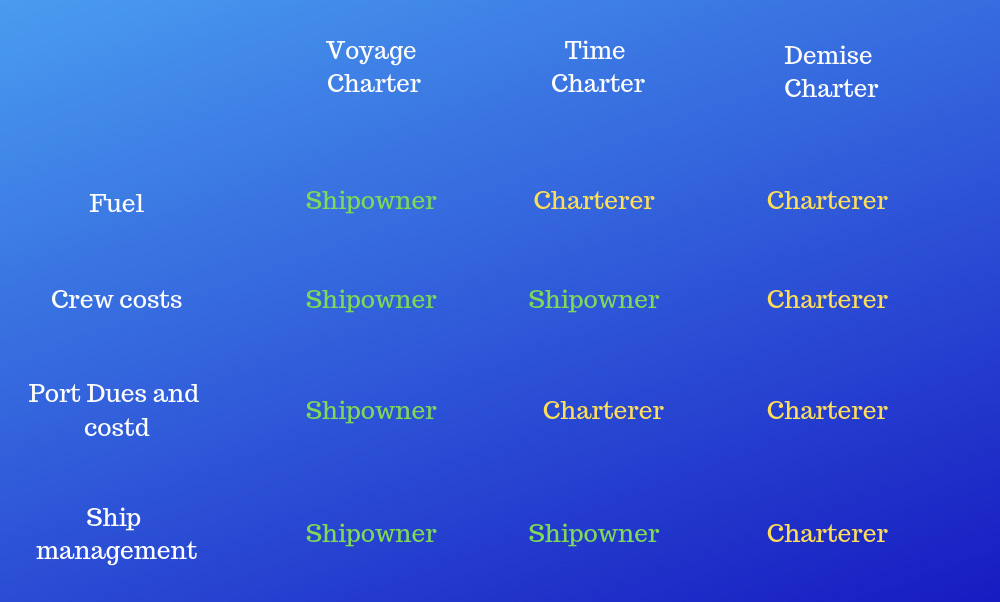
Each type of charter is a subject in itself. So in this blog we will explore the voyage charter.
Voyage Charter
It should be clear from the name.
Under the voyage charter, the ship is hired from the ship owner for one voyage.
One voyage could consists of multiple load ports and multiple discharge port.
The best analogy to the term voyage charter is that with hiring an Uber for a ride from one place to the other, sometimes with multiple stops in between.
So when we hire an Uber, we hire just the cab. The cab driver is still under the instructions of Uber.
Similarly, under the voyage charter, the charterer has hired the ship’s cargo space. But the Master and crew still remains under the disposal and instructions of ship owner and ship managers.
When we hire a cab for a ride, we just pay the hire (pre-agreed or by the meter). We do not pay for or are not concerned about the fuel costs or the amount of fuel consumed.
Similarly, under the voyage charter, charterer is not concerned about the fuel consumption. The fuel costs are for the ship owners.
And when we hire an Uber, we do not pay for maintenance of the cab.
Similarly, under the voyage charter it is the ship owner who pays for the maintenance of the ship.
Whenever we have any doubt about anything under voyage charter, just think of this analogy of hiring the cab.
Most likely you will get the answer.
Laytime, Demurrage and despatch
Lord Diplock during one of the leading cases on Laytime described the voyage charter party comprising of four stages.
- Stage 1 is the loading voyage: The voyage from wherever the ship is to the loading port specified in the voyage charter party
- Stage 2 is the Loading operation: The loading of the cargo at the port of loading
- Stage 3 is the carrying voyage: The voyage from load port to the discharge port specified in the voyage charter party.
- Stage 4 is the discharging operation: The discharging of the cargo from the ship to the port of discharging as specified in the voyage charter party.
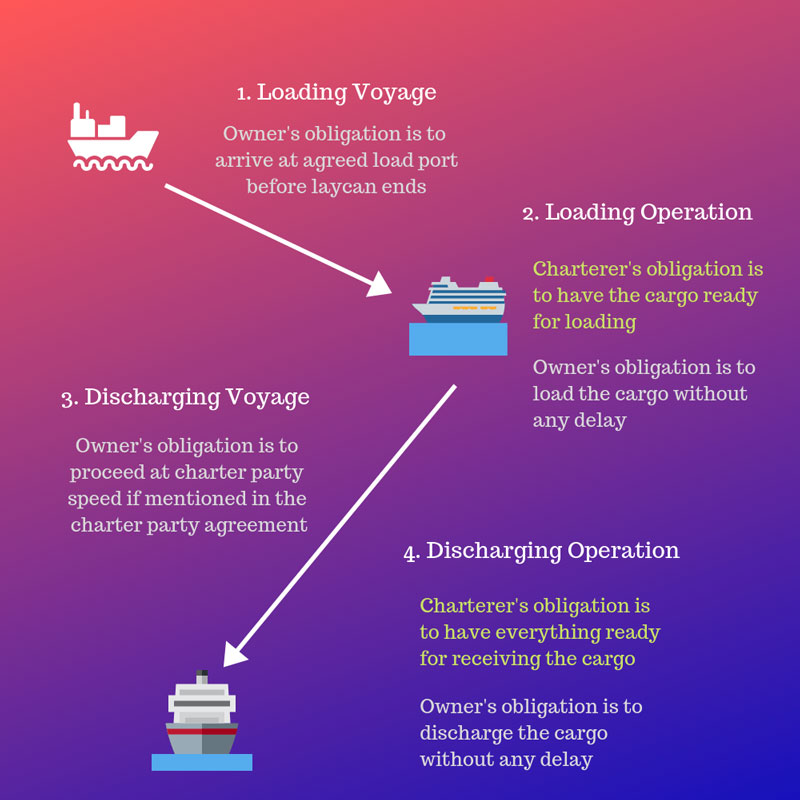
In the first and third stage, it is only the ship owner that need to perform. For example. ship owner is required to adjust the speed of the ship to arrive at the loading port within the agreed dates (Laycan).
And in the third stage, the ship owner is required to instruct the vessel to maintain the charter party speed.
However it is the second and fourth stage where most of the disputes take place.
Because in these two stages it is mutual reponsibility of the two parties to ensure that cargo loading and discharging is done without any delays.
In case of delays, each one can accuse the other for delays.
It is definately not commercially profiting for the shipowner if the voyage is extended beyond their expectations.
For example, what if the loading of the cargo took 15 days in comparison to just 2 days that shipowner had expected?
Or what if the ship could not berth at load port or discharge port for many days because of other ships ahead in line up?
Too many uncertainties.
But ship owner’s freight (and profits) cannot depend upon so many uncertainties.
So the shipowner and charterers agree on the factors like allowed number of days for loading and discharging.
In chartering terms this is called “Laydays” or “Laytime”.
The laydays is mentioned in the voyage charter party agreement between ship owner and charterer.
It could be mentioned as number of days and hours or as tons per hours or per day.
If the charterer uses more time for loading and discharging than the allowed laydays as per charter party agreement, then charterer is supposed to pay for extra time used.
The chartering term for this additional payment is “Demurrage”.
So we can say that if charterer uses more time for loading/discharging than laydays, they need to pay demurrage to the ship owner.
But if the charterer uses less time than laydays then ship owner need to pay the charterer for the time saved.
The chartering term for this is “despatch”.
Usually the agreed amount of despatch is about half of the agreed amount for demurrage.
Finally at the end of the voyage, a statement is made to shows the time saved and/or extra time taken at different ports.
Below is the simplified version of the laytime summary calculated at the end of the voyage.
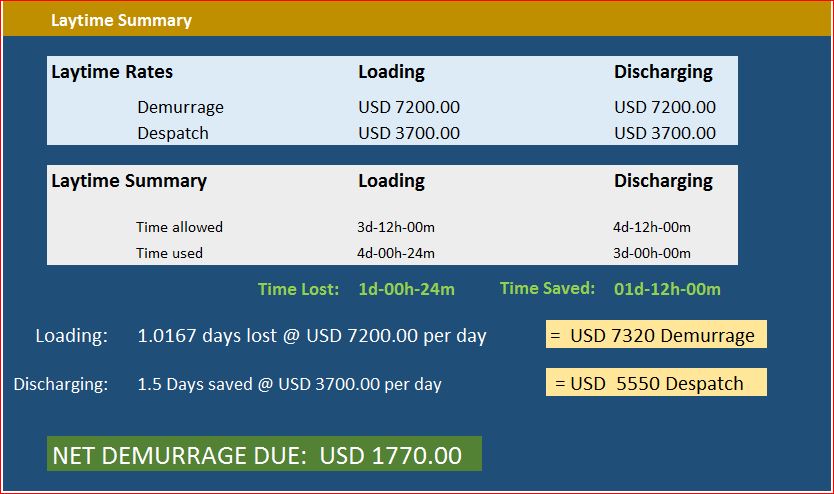
This statement would also show the final amount due and to whom it is due. Means if the final amount is demurrage or despatch and how much.
Notice of readiness and statement of facts
For calculation of laytime, it is important to know when the laytime counting and calculation would start.
This information is also provided in the charter party agreement.
In most of the cases, the laytime would commence to start when the vessel has arrived at the port. In chartering term, this is called “Arrived Ship“.
Legally, a ship is considered as an ‘Arrived Ship” only when
- Ship has arrived at the port of loading or discharging (port voyage charter) or at the designated berth (Berth Voyage charter).
- Ship is ready in all respects to commence loading (or discharging) or the cargo, and
- Master has sent the notice of readiness to the all parties concerned
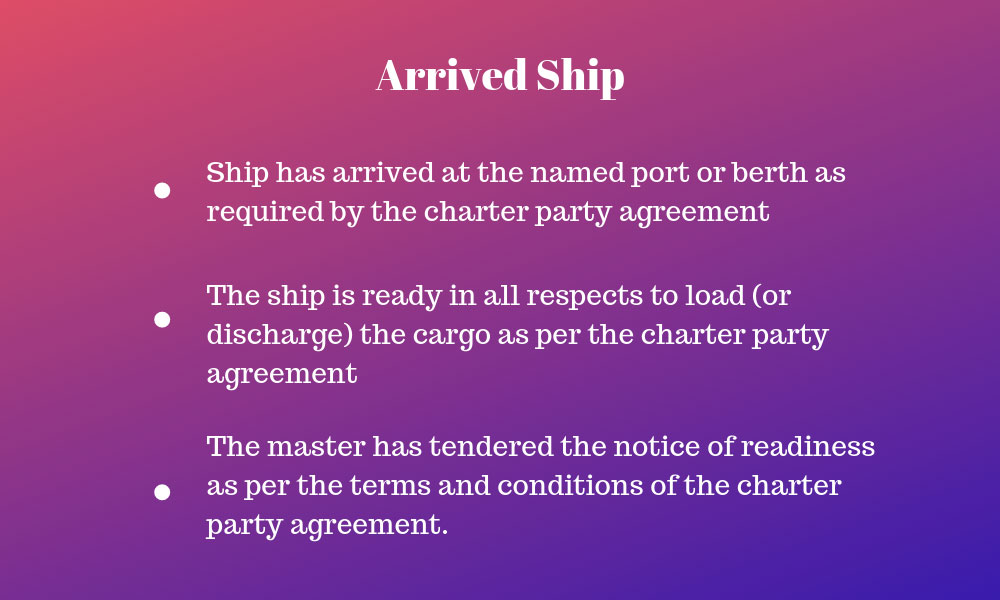
The charter party agreement contains the information if the voyage charter is a port voyage charter or a berth voyage charter.
Irrespective if it is port or berth voyage charter, from the ship’s point of view it is important that the master of the vessel send the notice of readiness.
Notice of readiness need to state that the vessel has arrived and she is ready in all respect to commence loading (or discharging ) of the cargo.
The laytime would start to commence at this time or sometimes few hours later if specifically mentioned in the charter party agreement.
Since one of the condition for the laytime to start is for the master to send the notice of readiness, it makes it so much of an important aspect.
Statement of Facts
The vessel and the master of the ship are the owner’s representative at the action site (loading port or discharging port).
Ship Owner would know only know the information that we provide them. They would use this information for calculation of any demurrage due to the charterers.
But for the correct demurrage calculation, the information we provide must be correct and we must not miss any important information such as any delays.
That make the statement of facts (commonly called SOF) an important document.
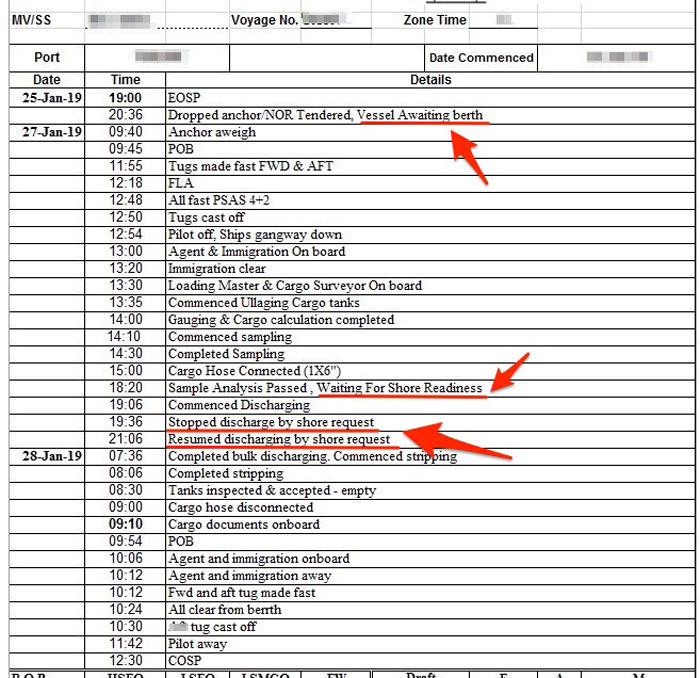
At the least, statement of facts must include
- any delays from shore side or from ship’s side and reason of delay
- any delays because of weather conditions
- Timings for the movement of the ship (such as times for anchoring, anchor aweigh, pilot onboard, NOR Tendered etc)
- Timings related to cargo operations (Commenced cargo operation and completed cargo operation
Master’s actions during voyage charter
Master and ship staff may not see the actual charter party agreement between the charterer and the ship owner.
And it is for their own benefit too.
Because there would be so many things in that which we seafarers are not concerned about.
But when the ship is fixed for the voyage charter, master will receive “Voyage instructions” from the charterer through the ship owner’s commercial team.
The voyage instructions contains the information from the charter party agreement that requires master’s attention and subsequent actions.
Master must not miss the points in the voyage orders that requires his actions.
One of the way to do it is to highlight the text of the voyage instructions that require his attention for easy follow up.
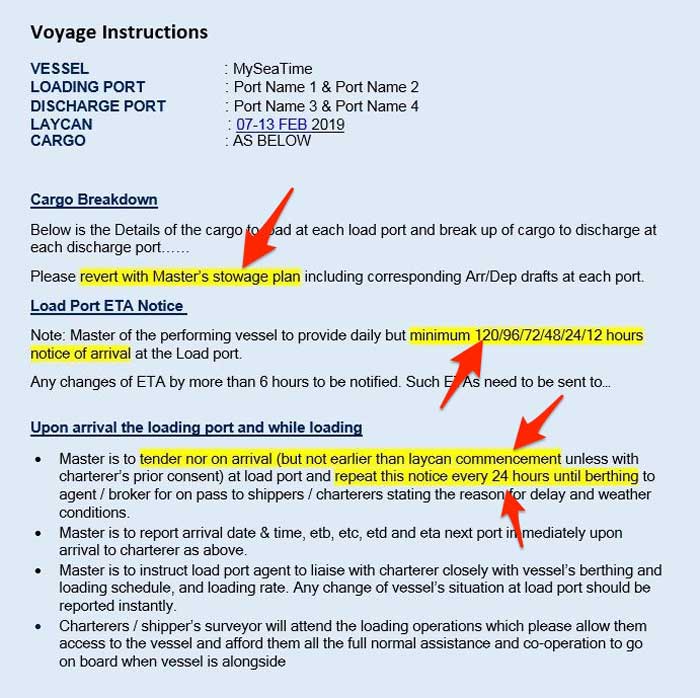
Once Master reads the voyage instructions, he may come across insufficient information that need more information or clarification.
Like this one in one of the voyage orders.
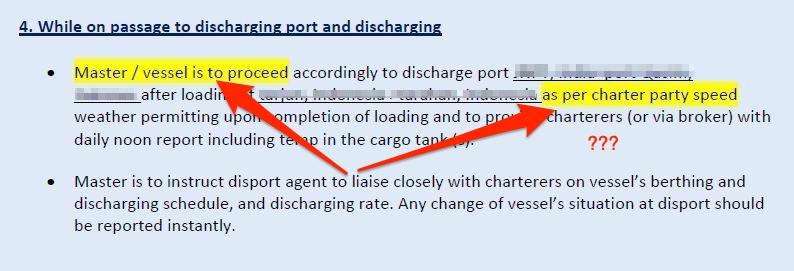
Clarification must be sought from the ship operator for any of such information in the voyage orders.
After all it just takes a simple email to get everything in place.
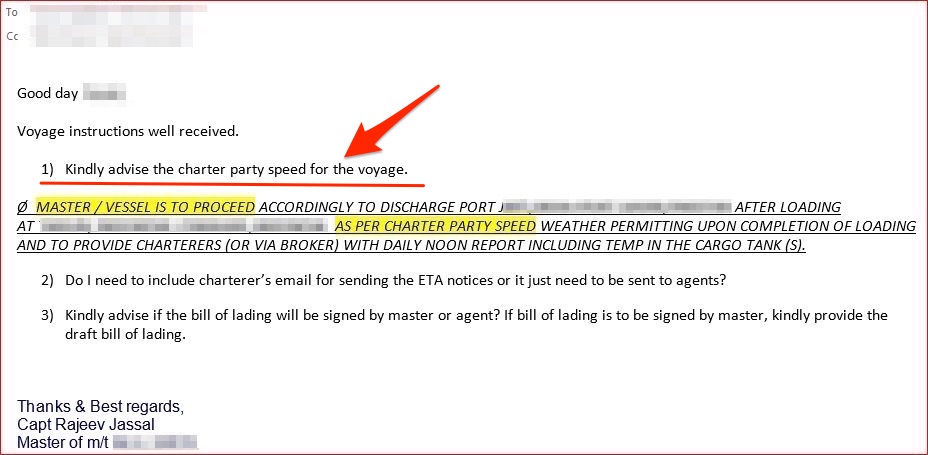
And once everything is clear and in place, it is just about following that.
Conclusion
There are may be only a handful of shipowners that do not rely on the charterer to find the cargo for their vessel.
Having the vessel on charter is so common.
And vessel can be chartered in different ways. Vessel can be on a voyage charter, time charter or demise/bareboat charter.
With respect to voyage charter, master and ship staff must understand few thing
First, when is the laycan for the vessel. This is period in which vessel must arrive at the load port.
If master thinks that vessel may not be able to make it to the loadport in laycan period, the commercial operator must be informed who can then try to extend the laycan.
Second, when the notice of readiness need to be tendered.
If the voyage charter is a port charter, NOR can only be tendered when vessel is at least within the port limits. Usually in this case NOR is tendered when pilot boards the vessel.
If the voyage charter is berth charter, the NOR can only be tendered when the vessel is alongside the designated berth.
Wrong tendering of NOR can make the Notice of readiness null and void and shipowner may loose tons of money.
Lastly, the ship staff need to be make sure that a correct record of statement of facts is kept. This is the document that is used for laytime calculations.
If the charterer uses more time than agreed for loading or discharging the cargo, the ship owner is supposed to get a pre-agreed compensation called demurrage.